Quick answer
PRP (platelet-rich plasma) hair therapy is a non-surgical treatment in which plasma from your own blood is injected into thinning areas of the scalp to support weak follicles. In Lahore it is offered by FCPS plastic surgeon Dr. Junaid Fateh. Sessions take 30 to 60 minutes with no downtime, usually as a course of 4 to 6. Improvement is gradual and varies. Cost is confirmed after consultation.
Also known as: Platelet-rich plasma hair treatment, PRP hair treatment, PRP for hair loss, PRP injections for hair, Platelet rich plasma therapy for hair, PRP se baalon ka ilaj, Baal girne ka ilaj · پی آر پی ہیئر ٹریٹمنٹ
About PRP hair therapy
PRP stands for platelet-rich plasma. A small amount of your blood is taken, spun in a centrifuge to separate the platelet-rich layer, and that concentrated plasma is injected into the thinning areas of your scalp. Platelets carry growth factors that are thought to support weak follicles, lengthen the growing phase of the hair cycle and improve the thickness of each hair.
PRP is not a substitute for a hair transplant. It cannot grow hair where follicles have already been lost for years, and it does not move hair from one place to another. Where it may help is in early to moderate thinning, when follicles are still there but producing finer, weaker hair, and as a supporting treatment around a transplant.
The research on PRP is encouraging but mixed, and the response varies a great deal from one person to the next. Some people notice less shedding and fuller hair within a few months, while others see little change. Being clear about this from the start is part of deciding whether it is worth trying.
How Dr. Junaid approaches PRP hair therapy
Hair fall has many causes, and PRP only makes sense once the cause is understood. Dr. Junaid Fateh begins by examining your scalp, the pattern of thinning and your medical history. Sudden heavy shedding after an illness such as dengue or typhoid, after stress or after childbirth is often temporary, while problems such as low iron or an underactive thyroid need treating directly. For that reason he may ask for blood tests first.
If PRP is suitable, he explains a realistic course and how it fits with other options, such as medication now or a transplant later. Each session is prepared fresh from your own blood under sterile conditions, and the plasma is spread evenly across the thinning zones rather than placed in a few spots.
He also checks for reasons to avoid or delay treatment, including some blood or platelet disorders, blood-thinning medicines, an active scalp infection and pregnancy. Side effects are usually minor, such as tenderness, pinpoint bleeding, mild swelling or a headache for a day, and infection is rare. He goes through these with you before you decide.
Techniques and options
Options Dr. Junaid may recommend include:
- Standalone PRP course: a series of sessions around a month apart for early pattern thinning, followed by a review of how you have responded.
- PRP with medication: combining injections with prescribed medicines that slow pattern hair loss, as the two work in different ways.
- PRP around a hair transplant: sessions before or after FUE or FUT to support the existing hair and the healing scalp.
- Maintenance sessions: if you respond well, top-up treatments every few months to help keep the improvement.
- PRP for thinning in women: a gentle option for a widening parting or diffuse thinning once medical causes have been ruled out.
What to expect on the day
A session usually takes 30–60 minutes. Blood is drawn from your arm, much like a routine test, and processed while you wait. Your scalp is cleaned and may be numbed, then a series of small injections is given across the treated area. You can return to normal activity the same day, though the scalp may feel tender for a day or so.
Before & after
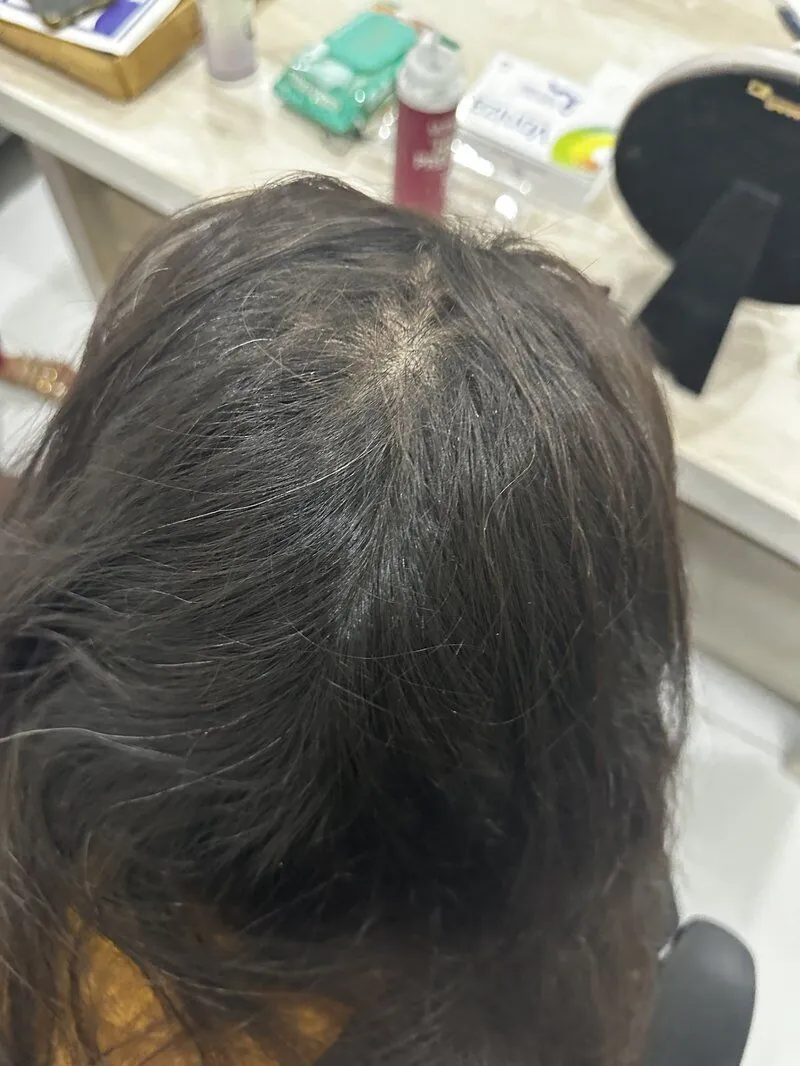
 Before
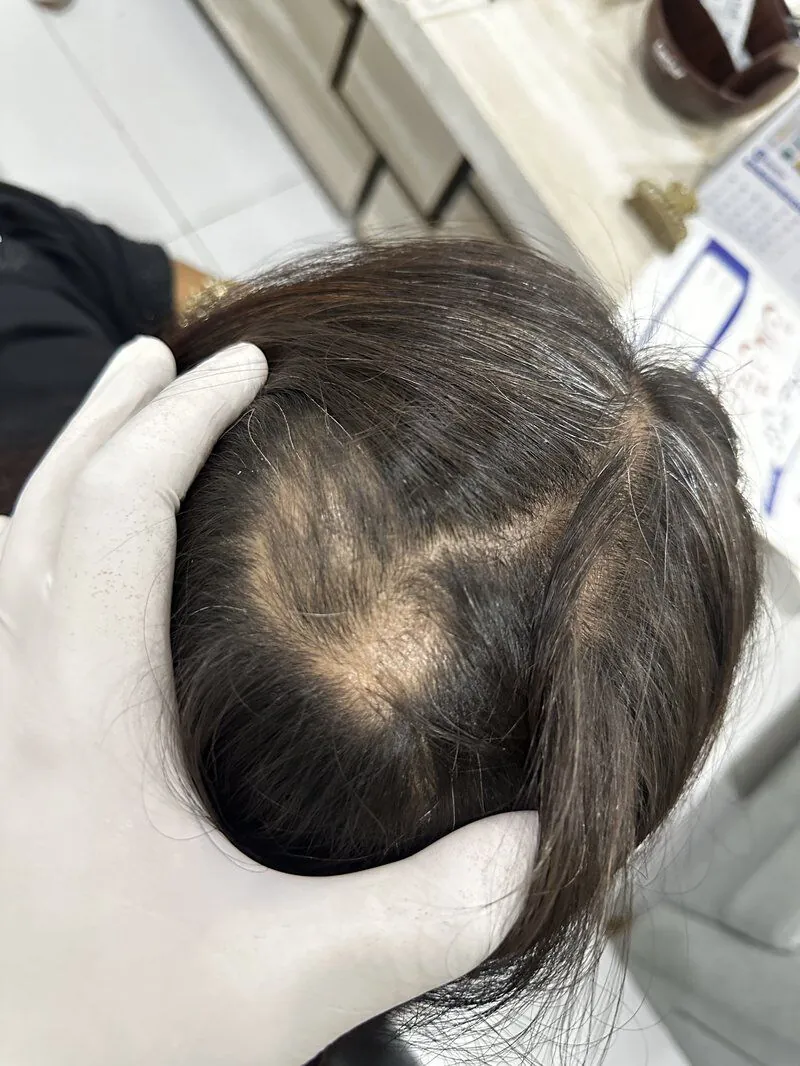
After
Photos are shared with patient consent. Results vary from person to person. See more results
Benefits of PRP Hair Therapy
No Surgery Needed
Treatment is given by injection in the clinic, with no cuts, stitches or overnight stay.
Made From Your Own Blood
The plasma is prepared from your own blood, which keeps the risk of a reaction to the product very low.
Short Sessions
Each visit usually takes under an hour, so it fits around work or study.
Supports Existing Hair
It aims to strengthen weak follicles and reduce shedding in early thinning.
Works Alongside Other Care
It can be combined with medication or used before or after a hair transplant.
Straight Back to Your Day
Most people return to normal activities as soon as the session is over.
Are you a good candidate?
PRP hair therapy may be worth considering if you:
- Have early to moderate pattern thinning where hair is still present but finer
- Have a widening parting or diffuse thinning that has been medically checked
- Want to support your own hair before or after a transplant
- Would like to try a non-surgical option first
- Do not have a bleeding or platelet disorder and are not taking blood-thinning medicine
- Can commit to a course of sessions and follow-up reviews
PRP is unlikely to help areas that have been completely bald for a long time. In that case Dr. Junaid will talk you through FUE or FUT instead.
Recovery & aftercare
There is very little downtime after PRP, but any benefit builds slowly over a course of treatment:
- Same day
The scalp can feel tight or tender, with slight redness or pinpoint bleeding that settles within hours.
- Next day
Wash your hair as advised, usually from the next day, and avoid heavy exercise, saunas and hair colouring for the short period the team recommends.
- First course
Sessions are usually spaced about four weeks apart, with your progress reviewed along the way.
- Months 3–6
If you are responding, shedding often reduces and hair may start to feel thicker.
- Maintenance
Top-up sessions every 3–6 months may help to hold on to the improvement.
Progress is checked at follow-up visits, often with comparison photos, so you and Dr. Junaid can judge whether PRP is genuinely helping.
What patients say
Started PRP hair therapy with Dr. Junaid as a preventive measure. My hair fall has reduced by 70% and I'm seeing new growth. Excellent treatment.
Related articles
 Hair Restoration
Hair Transplant Cost in Pakistan: What Affects the Price
What decides the cost of a hair transplant in Pakistan: graft count, technique, who does the work, facility and aftercare, plus red flags in...
 Hair Restoration
Hair Transplant Side Effects and How to Reduce Them
Swelling, scabs, numbness, shock loss and folliculitis after a hair transplant: what is normal, how to reduce side effects and when to...
Hair Restoration
Hair Transplant Recovery Timeline: Day by Day, Month by Month
What happens after a hair transplant: swelling, scabs, shedding and new growth. A clear day-by-day and month-by-month recovery guide from...
PRP Hair Therapy FAQs
How much does PRP hair therapy cost?
The cost depends on how many sessions are planned, the size of the area treated and whether PRP is combined with other treatment. Once Dr. Junaid has assessed your scalp he gives you a personalised quote, and the cost guide covers the factors in more detail.
Does PRP for hair hurt?
Most people describe it as uncomfortable rather than painful. The scalp can be numbed beforehand, and the injections themselves take only a few minutes. Tenderness for a day or so afterwards is common.
How long do PRP results last?
PRP does not switch off pattern hair loss, so any benefit tends to fade over time without maintenance. People who respond well often have top-up sessions every few months. Results vary between people, and some see little change.
Will I need time off work?
Usually not. Most people go back to work the same day or the next. The scalp may look slightly red for a few hours.
How many sessions will I need?
Most first courses involve around four to six sessions, about a month apart. Dr. Junaid reviews your progress during the course and will tell you honestly if it is not making a difference.
Will PRP bring back hair on a bald patch?
PRP works on follicles that are still alive, even if they are only producing thin hair. It cannot revive scalp that has been smooth and bald for years, where a transplant is the more realistic option.
Is PRP useful after a hair transplant?
It can be. PRP is sometimes used alongside FUE or FUT to support healing and the existing hair around the grafts. Dr. Junaid will tell you whether it is worth adding in your case.
Can I have an online consultation from abroad?
Yes. Photos of your scalp, including the parting and crown, can be sent on WhatsApp, followed by a video consultation in which Dr. Junaid advises whether PRP looks suitable and which tests may help. Treatment itself is planned in person, and because a course takes several sessions, it helps to discuss timing around your visits to Pakistan.
What are the risks or side effects of PRP hair therapy?
Side effects are usually minor and short-lived, such as tenderness, redness, pinpoint bleeding, mild swelling or a headache for a day. Infection is rare. Because the plasma comes from your own blood, the risk of a reaction to the product is very low. Dr. Junaid reduces risks by preparing each treatment under sterile conditions and checking for reasons to avoid PRP, such as some platelet or bleeding disorders, blood-thinning medicines, an active scalp infection or pregnancy.
When will I see the final results of PRP hair therapy?
PRP works gradually. If you respond, shedding often reduces and hair may start to feel thicker around three to six months into a first course of four to six sessions. Progress is checked at follow-up visits with comparison photos, and top-up sessions every three to six months may help to hold the improvement. Some people see little change, and Dr. Junaid will tell you honestly if PRP is not helping.
Roman Urdu mein maloomat (پی آر پی ہیئر ٹریٹمنٹ)
PRP hair therapy mein aap ke apne khoon se plasma tayyar kar ke sar ki jild mein injection ke zariye lagaya jata hai, taake kamzor baalon ko sahara mile. Yeh surgery ke baghair ilaj hai aur aam tor par 4 se 6 sessions ka course hota hai. Dr. Junaid Fateh Lahore mein yeh ilaj karte hain. Mashware ke liye WhatsApp par rabta karein.
WhatsApp par mashwara book karein