Quick answer
Gynecomastia surgery removes excess breast gland and fat in men to create a flatter, firmer chest. Dr. Junaid Fateh, an FCPS plastic surgeon, sees patients in Lahore. The operation takes about 1 to 2 hours under general anaesthesia or local anaesthesia with sedation, usually as a day case. Recovery takes 1 to 2 weeks, and the result is permanent for most men. Cost depends on your plan and is confirmed after consultation.
Also known as: Male breast reduction, Gynaecomastia surgery, Man boobs surgery, Gyno surgery, Gynocomastia, Chhati ki charbi ka ilaj, Mardon ki chhati ka operation, Seene ki charbi ka operation · مردوں کی چھاتی کا آپریشن
About Gynecomastia
Gynecomastia is the medical name for enlarged breast tissue in men. It may affect one side or both, and it ranges from a small, puffy swelling behind the nipple to a full, rounded chest that shows through a shirt. It is common and harmless in itself, yet many men live with it quietly for years because it feels awkward to talk about.
Dr. Junaid Fateh is a plastic, cosmetic and reconstructive surgeon who sees patients in Lahore, and male chest surgery is one of his signature specialties. Surgery removes the extra gland and fat, reshapes the chest and, where needed, tightens loose skin, so your chest looks flatter, firmer and in proportion with the rest of your body.
What causes gynecomastia?
Most cases come down to a change in the balance between oestrogen and testosterone. Common triggers include the hormonal shifts of puberty, weight gain, anabolic steroids and some bodybuilding supplements, and certain prescription medicines. Less often, liver, kidney or thyroid problems or other hormone conditions play a part, and in many men no single cause is found.
Some men have pseudogynecomastia, where the fullness is mostly fat rather than gland. Telling the two apart matters, because it decides which technique will work.
Grades of gynecomastia
Surgeons use slightly different grading systems, but in plain terms:
- Grade 1: a small, firm button of tissue under the areola, often noticed as puffy nipples under a T-shirt.
- Grade 2: wider fullness across the chest with little or no loose skin.
- Grade 3: moderate enlargement with some extra skin, so the chest starts to sag.
- Grade 4: a large, breast-like chest with clear skin excess, where skin removal is often needed.
How Dr. Junaid approaches gynecomastia
At your consultation, Dr. Junaid listens to what bothers you, asks about medicines, supplements and gym history, and examines your chest to feel how much is firm gland and how much is soft fat. He also checks skin tone, nipple position and any difference between the two sides. If a medical cause seems possible, he may suggest blood tests or a check-up first.
His aim is a natural, athletic look rather than an over-hollowed chest. A thin layer of tissue is usually left under the nipple to prevent a sunken, dish-shaped area, and the edges are blended into the armpit and upper tummy so there is no visible step. Like any surgery, gynecomastia correction carries risks, including bleeding or a collection of blood, fluid build-up, an uneven contour, changes in nipple sensation and scarring. Dr. Junaid goes through these with you at consultation.
Privacy and discretion
Many men find this subject hard to raise, even with close family. You can make first contact privately on WhatsApp, share photos in confidence and have a one-to-one consultation. The compression vest sits flat under a shirt or kameez, and the small scars are easy to keep private while they mature.
Techniques and options
Liposuction removes soft fat well but struggles with dense gland, which usually has to be cut out directly. That is why many men need a combination. Options Dr. Junaid may recommend include:
- Liposuction alone: for a mainly fatty chest with good skin tone, using a fine tube through tiny incisions.
- Gland excision: removal of the firm disc of gland through a small cut along the lower edge of the areola.
- Combined liposuction and excision: the most common approach for true gynecomastia, removing the gland and smoothing the surrounding fat in one operation.
- Puffy nipple correction: a focused removal of a small amount of gland for slim or athletic men whose concern is limited to the nipple area.
- Skin reduction: for higher grades or after major weight loss, where extra skin is removed and the nipple may be repositioned, leaving longer scars.
What to expect on the day
You arrive having fasted as instructed, and Dr. Junaid marks your chest while you stand. The operation usually takes one to two hours under general anaesthesia or local anaesthesia with sedation. Most men go home the same day wearing a compression vest, so arrange for someone to drive you.
Before & after
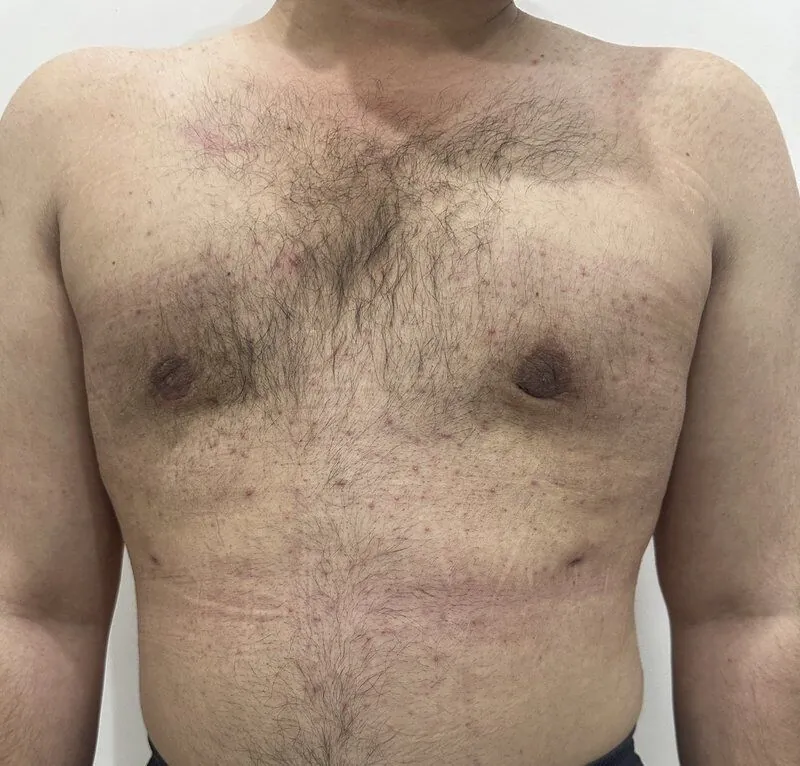
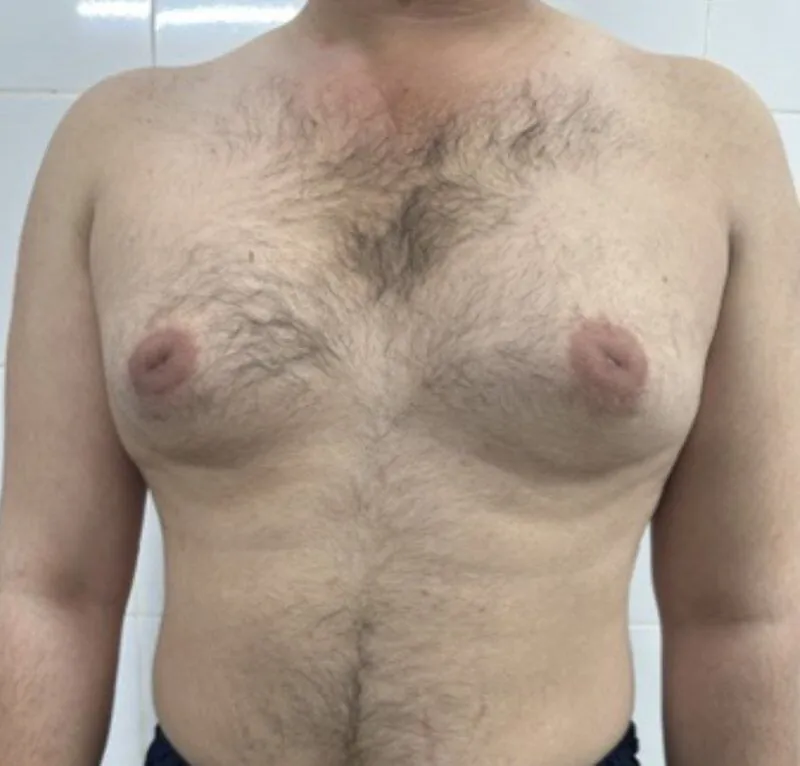 Before
After
Photos are shared with patient consent. Results vary from person to person. See more results
Benefits of Gynecomastia
A Flatter, Firmer Chest
Removing the extra gland and fat gives your chest a tighter, more masculine outline.
Discreet, Private Care
From your first WhatsApp message to your final check-up, your concerns and photos are handled in confidence.
Well-Hidden Scars
Incisions are small and usually sit along the lower edge of the areola, where they tend to fade well.
Freedom in Your Clothes
Fitted kurtas, T-shirts and gym wear sit more naturally once the chest is flatter.
Quick Return to Routine
Many men are back at desk work within about a week, depending on how much surgery is needed.
Long-Lasting Result
Gland tissue that has been removed rarely comes back, especially if your weight stays steady.
Are you a good candidate?
Gynecomastia surgery may suit you if you:
- Have a puffy or enlarged chest that has not improved with exercise and weight loss
- Can feel a firm, rubbery disc of tissue behind one or both nipples
- Developed the enlargement in your teens and it has not settled as you got older
- Avoid swimming, the gym or fitted clothes because of how your chest looks
- Are close to a healthy weight that has been stable for some months
- Are not using anabolic steroids or other substances that can drive breast growth
- Are in good general health and want a natural, proportionate chest
Gynecomastia in teenage boys often settles on its own, so Dr. Junaid usually advises younger patients to wait and be reviewed. If a medical cause seems likely, he may suggest blood tests or a check-up before surgery is planned.
Recovery & aftercare
Most men find recovery from gynecomastia surgery easier than they expected. A typical course looks like this, although everyone heals at their own pace:
- Days 1–3
Your chest feels tight and sore, and a compression vest is worn day and night. Prescribed pain relief and short walks around the house help.
- Week 1
Many men return to office or desk work. Bruising and swelling begin to settle, and your wounds are checked at your follow-up visit.
- Weeks 2–3
Most daily tasks are comfortable again. Keep wearing the vest and avoid heavy lifting, running and upper-body exercise.
- Weeks 4–6
Light gym sessions usually restart, with chest workouts added gradually once Dr. Junaid is happy with healing. The vest is normally stopped around this time.
- Months 3–6
The last of the swelling fades and your final chest shape becomes clear. Scars keep softening and lightening over the following year.
In the Lahore summer the compression vest can feel warm, so some men prefer to schedule surgery for the cooler months. Keeping a spare vest makes it easier to wash one and wear the other.
What patients say
Professional, discreet, and amazing results. I had concerns about privacy, but the clinic handled everything with utmost confidentiality and care.
I was nervous about my gynecomastia surgery, but Dr. Junaid made me feel completely at ease. His expertise is unmatched. I'm thrilled with my new confident look.
Related articles
Breast & Chest Surgery
Gynecomastia Surgery Recovery: Week by Week
How long does gynecomastia surgery recovery take? A week-by-week guide to the compression vest, drains, work, the gym, swelling and scars...
Breast & Chest Surgery
Gynecomastia: Causes, When It Goes Away and Treatment Options
Why men develop breast tissue, when teenage gynecomastia settles on its own, and when surgery helps. A clear guide to causes, treatment and...
 Patient Guides
Planning Cosmetic Surgery in Pakistan While Living Abroad
Living in the UK, Gulf or North America? How to plan cosmetic surgery in Pakistan: video consultation, WhatsApp photos, how long to stay and...
Gynecomastia FAQs
How much does gynecomastia surgery cost in Lahore?
The fee depends on the grade of gynecomastia, whether you need liposuction, gland removal or both, whether any skin has to be removed, the type of anaesthesia and the hospital used. Dr. Junaid gives you a personalised quote after your consultation, and the cost guide explains these factors in more detail.
Is gynecomastia surgery painful?
You are under general anaesthesia or local anaesthesia with sedation, so you should not feel pain during the operation. Afterwards most men describe tightness and soreness rather than sharp pain, which is usually well controlled with tablets for the first few days.
Will the results last?
Gland tissue that has been removed does not normally grow back, so the result is long-lasting for most men. Major weight gain, anabolic steroids, some medicines or hormonal changes can enlarge the tissue that remains, so a steady weight and healthy lifestyle help protect your result.
How much time off work will I need?
Many men return to desk work within about 5 to 7 days, while physically demanding jobs may need 2 to 3 weeks. Gym training is built back up over roughly 4 to 6 weeks. Dr. Junaid will give you a personal timeline based on your surgery and the work you do.
Do I need liposuction, gland removal or both?
If your chest is mainly soft fat, liposuction alone may be enough. A firm disc of gland behind the nipple has to be cut out through a small incision, because liposuction does not remove dense gland well. Many men need a combination, and Dr. Junaid confirms this by examining you.
Will anyone know I have had surgery?
The scars are small and usually sit at the lower edge of the areola, where they blend in as they mature. The compression vest lies flat under a shirt or kameez, so many men only need a few days away from work. Your consultation and records are kept confidential.
What causes gynecomastia, and can it go away on its own?
It is usually linked to a shift in the balance between oestrogen and testosterone, which can happen during puberty, with weight gain, with some medicines or with steroid use. Teenage gynecomastia often settles without treatment, but tissue that has been present for years and become firm rarely shrinks by itself.
Can I have an online consultation from abroad?
Yes. If you live overseas or in another city, you can send chest photos on WhatsApp and book a video consultation with Dr. Junaid. He can explain the likely approach and recovery, and the final plan is confirmed when he examines you in person before surgery.
What are the risks or side effects of gynecomastia surgery?
Swelling, bruising, soreness and some numbness around the nipples are common and usually settle over the following weeks, with the final chest shape clear by about 3 to 6 months. Less common risks include bleeding or a collection of blood, fluid build-up, infection, an uneven contour, a lasting change in nipple sensation and scarring. Dr. Junaid reduces these risks with a careful examination beforehand, by leaving a thin layer of tissue under the nipple to avoid a sunken look, and with a compression vest and follow-up visits.
What is the best age for gynecomastia surgery?
There is no single right age. Gynecomastia that starts in the teenage years often settles on its own, so Dr. Junaid usually advises younger patients to wait and be reviewed, and surgery is generally considered once puberty is complete and the chest has stopped changing. Adult men of any age can be suitable if they are in good health and close to a stable weight. Weight loss can reduce a mainly fatty chest, but exercise does not remove firm gland tissue, which is why surgery is needed when it persists.
Roman Urdu mein maloomat (مردوں کی چھاتی کا آپریشن)
Gynecomastia mein mardon ki chhati par extra gland aur charbi aa jati hai, jis se seena bhari ya ubhra hua nazar aata hai. Dr. Junaid Fateh, FCPS plastic surgeon, Lahore mein mareezon ko dekhte hain aur liposuction ya gland nikal kar chhati ko flat aur mardana shape dete hain. Aksar mard taqreeban ek hafte mein daftar ka kaam dobara shuru kar dete hain. Mashware ke liye WhatsApp par rabta karein.
WhatsApp par mashwara book karein