Quick answer
Congenital deformity surgery corrects differences a child is born with, such as extra or joined fingers, ear shape problems and some birthmarks, to improve function and appearance. FCPS plastic surgeon Dr. Junaid Fateh sees families in Lahore. Surgery takes 1 to 6 hours under general anaesthesia, usually with 1 to 3 days in hospital and 1 to 4 weeks of recovery. Cost depends on your plan and is confirmed after consultation.
Also known as: Birth defect surgery, Congenital hand surgery, Extra finger removal (polydactyly), Joined fingers separation (syndactyly), Paediatric plastic surgery, Paidaishi naqs ka ilaj, Izafi ungli ka operation, Judi hui ungliyon ka operation · پیدائشی نقائص کی سرجری
About Congenital Deformities
Some children are born with a part of the body that has formed differently. It might be an extra finger, two fingers joined together, an ear that is small or unusually shaped, or a birthmark. Doctors call these congenital differences or deformities. They are nobody’s fault, and many can be improved with well-timed surgery.
Dr. Junaid Fateh is a plastic and reconstructive surgeon in Lahore who treats congenital conditions of the hand, ear, face and skin. His aim is always twofold: to help the affected part work as well as it can, and to help it look as natural as possible so your child can grow up feeling comfortable.
Not every difference needs an operation, and not every operation should happen straight away. Some conditions are best treated in the first year or two of life, while others are safer to correct when a child is older. Adults who were never treated as children can also be assessed.
How Dr. Junaid approaches congenital deformity correction
The first visit is about understanding your child, not rushing towards theatre. Dr. Junaid examines the area, watches how it moves and is used in play, and may ask for an X-ray or other tests. He explains what can realistically be achieved, what cannot, and whether waiting would be the wiser choice.
Timing is planned around growth. Hands, ears and faces keep changing through childhood, so some corrections are done in stages with check-ups in between. You will know the likely sequence from the beginning, which helps the family plan school, travel and time off.
Safety comes first for young patients. Surgery under general anaesthesia is carried out in a hospital setting with an anaesthetist experienced in caring for children. Where a condition is better managed jointly with another specialist, such as a paediatrician, orthopaedic surgeon or therapist, Dr. Junaid coordinates that care or refers you on. As with any operation, there are risks such as bleeding, infection, scarring and occasionally the need for further surgery, and Dr. Junaid goes through these with you at consultation.
Techniques and options
Options Dr. Junaid may recommend include:
- Extra finger or thumb (polydactyly): removing the extra digit and, where needed, rebalancing the joint, tendons and ligaments so the remaining finger or thumb lines up and works well.
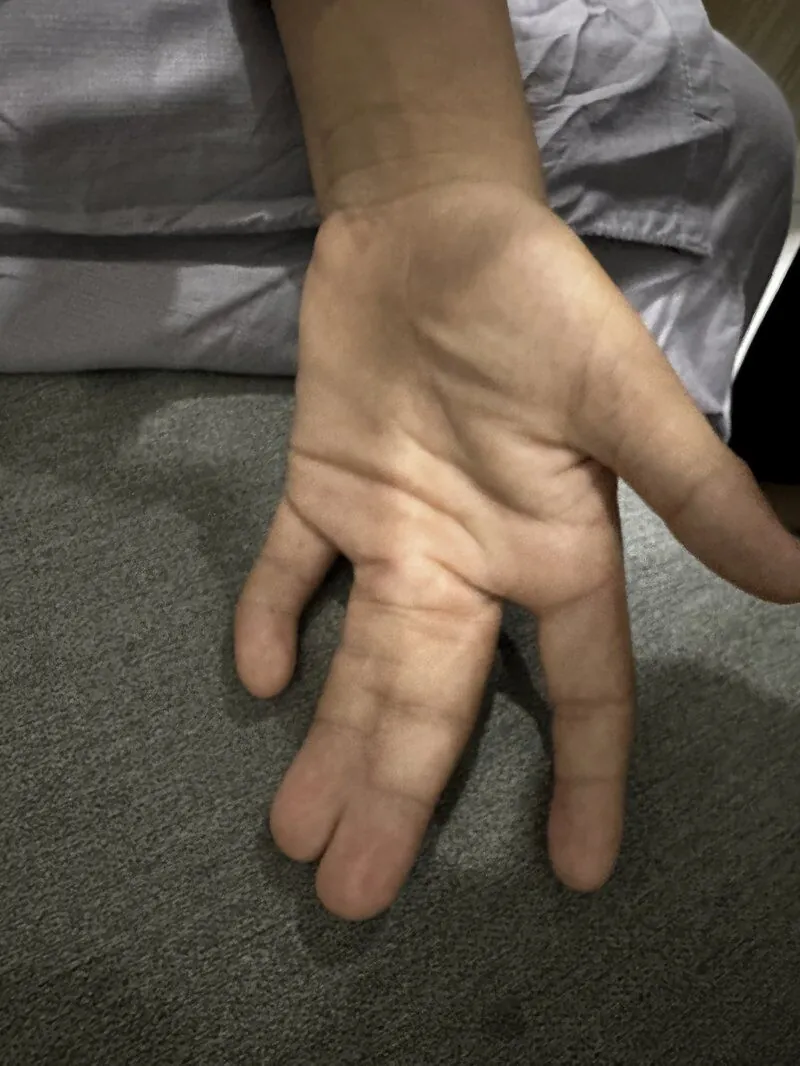
- Joined fingers (syndactyly): separating the fingers with carefully designed skin flaps, often with a small skin graft, so each finger can move freely.
- Trigger thumb in children: releasing the tight tunnel that stops the thumb from straightening fully.
- Ear differences: reshaping prominent or folded ears, and staged reconstruction for a small or underdeveloped ear (microtia) once the child is old enough.
- Birthmarks and skin lesions: surgical removal of selected moles, vascular lesions and skin tags, with scars placed as discreetly as possible. Some birthmarks are better treated without surgery, and Dr. Junaid will tell you if so.
- Other limb and facial differences: constriction bands, tight skin and some facial asymmetries can often be improved with local flaps, grafts or fat transfer.
- Chest wall differences: Underdeveloped chest muscle or breast (as in Poland syndrome) and some chest shape differences can be improved with fat transfer, implants or tissue flaps once growth is complete.
Cleft lip and palate is covered on its own page.
What to expect on the day
Your child will need to stop eating and drinking for a few hours beforehand, and the team will give you exact timings. A parent can usually stay until your child is asleep and is there again in the recovery area. Most hand and ear procedures finish with a dressing or splint, and the hospital stay is usually one to three days depending on the operation.
Before & after
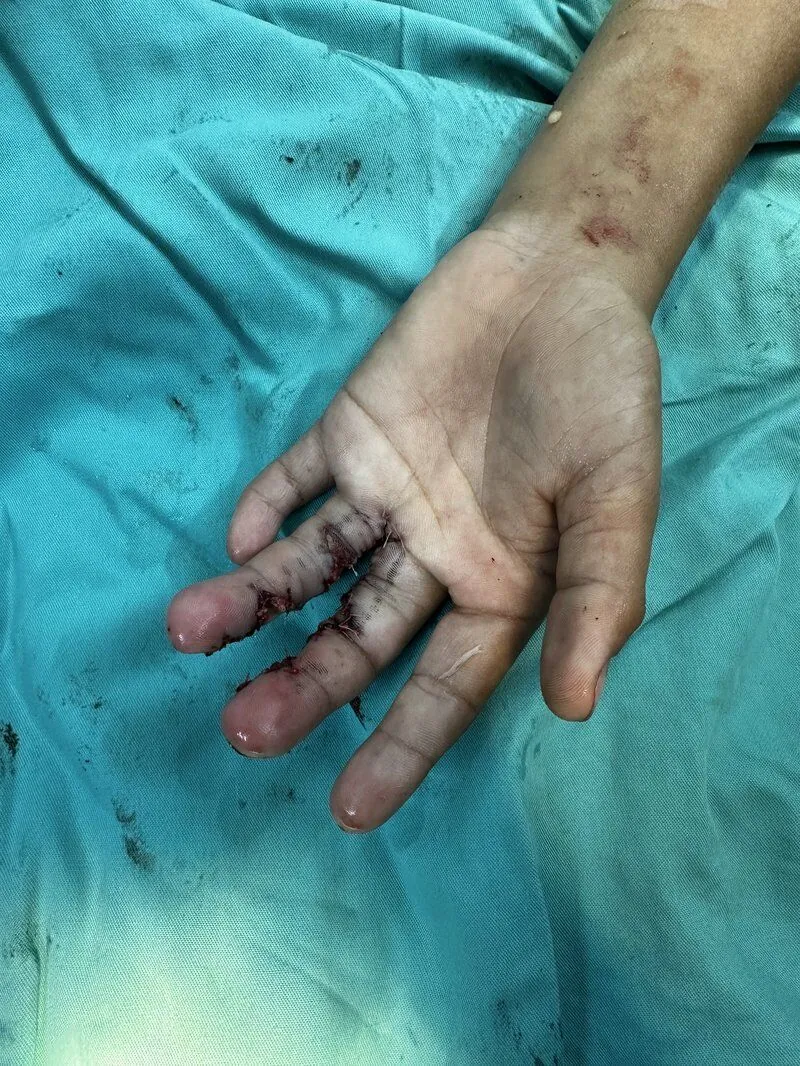
 Before
After
Photos are shared with patient consent. Results vary from person to person. See more results
Benefits of Congenital Deformities
Better Hand Use
Correcting extra, joined or bent fingers can make gripping, writing and play easier.
A More Natural Look
Careful flap design and scar placement help the treated area blend in as your child grows.
Timed Around Growth
Surgery is scheduled for the age when it is safest and most likely to give a lasting result.
Family-Centred Care
Your child is examined gently, and parents are involved in every decision along the way.
Safety First
Operations take place in a hospital setting with an anaesthetist experienced in caring for children.
Confidence for the Future
Treating a visible difference can help a child feel more at ease at school and with friends.
Are you a good candidate?
Congenital deformity surgery may be suitable for:
- Babies and children born with an extra finger or toe
- Children whose fingers are partly or fully joined together
- Young children with a thumb that stays bent and will not straighten
- Children or adults with prominent, folded or underdeveloped ears
- People with a birthmark, mole or skin lesion present since birth that causes concern
- Children with tight bands, webbing or other limb differences that limit movement
- Adults who were not treated in childhood and would like an assessment
After examining your child, Dr. Junaid will tell you honestly whether surgery is likely to help, and when it is best done.
Recovery & aftercare
Recovery depends on the condition and the operation, but a typical pattern looks like this:
- First few days
Some soreness, eased with regular pain relief. A dressing or splint keeps the area protected.
- 1–2 weeks
First wound check. Stitches are often dissolvable, and any others are removed in clinic.
- 2–6 weeks
After hand surgery a splint or protective dressing is usually worn for this period, with gentle movement when Dr. Junaid advises.
- 2–6 months
Scars are pink at first and slowly soften. Exercises or hand therapy may continue to improve movement.
- Through childhood
Regular check-ups follow your child’s growth, and any further stages are planned if needed.
Most children return to school or nursery within one to four weeks. Scars keep fading for a year or more, and results vary from child to child.
Congenital Deformities FAQs
What is the right age for surgery?
It depends on the condition. Extra or joined fingers are often treated in early childhood, while reconstruction of an underdeveloped ear is usually planned once the child is older. Dr. Junaid recommends timing after examining your child, balancing safety, growth and function.
Will my child need more than one operation?
Some conditions are corrected in a single procedure. Others, such as complex joined fingers or an underdeveloped ear, are treated in stages as your child grows. You will be told the likely sequence at the start so the family can plan ahead.
Is the surgery painful for my child?
The operation is done under general anaesthesia, so your child is asleep and feels nothing. Afterwards there is usually mild to moderate soreness for a few days, which regular pain relief suitable for children controls well.
Will the results last as my child grows?
In most cases the correction is permanent. Because children keep growing, Dr. Junaid continues to see your child over the years so that any change, such as a scar tightening, can be picked up and treated early. Results vary from person to person.
How much time off school or work is needed?
Most children are back at school or nursery within one to four weeks, depending on the operation and whether a splint is needed. A parent will usually want a few days off at the start. Adults having smaller procedures can often return to desk work within a week or two.
How much does congenital deformity surgery cost?
The cost depends on the condition, how complex the correction is, whether it is done in stages, the type of anaesthesia and the length of hospital stay. You will receive a personalised quote after Dr. Junaid has examined your child, and the cost guide explains these factors in more detail.
Can I have an online consultation from abroad?
Yes. Families overseas or in other cities can send clear photos on WhatsApp and book a video consultation with Dr. Junaid. He can explain the likely options and timing, but the final plan is confirmed after he examines your child in person in Lahore.
What are the risks or side effects of congenital deformity surgery?
As with any operation, there are risks such as bleeding, infection, scarring and occasionally the need for further surgery. After separating joined fingers, part of a skin graft may not take, or the web between the fingers can creep forward again as the child grows. Risks are reduced by careful timing, surgery in a hospital setting with an anaesthetist experienced in caring for children, and regular follow-up as your child grows.
When will I see the final results of congenital deformity surgery?
Scars are pink at first and slowly soften over 2 to 6 months, and they keep fading for a year or more. Movement after hand surgery can keep improving with exercises or hand therapy. Because children keep growing, Dr. Junaid continues to check the result through childhood, and some conditions are only complete after a planned series of stages.
Roman Urdu mein maloomat (پیدائشی نقائص کی سرجری)
Kuch bachche izafi ya judi hui ungliyon, kaan ki mukhtalif banawat ya kisi aur paidaishi farq ke sath paida hote hain. Dr. Junaid Fateh Lahore mein bachchon ko dekhte hain aur bachche ki umar aur nashonuma ke mutabiq operation ka sahi waqt batate hain. Mashware ke liye WhatsApp par rabta karein.
WhatsApp par mashwara book karein