Quick answer
Hand surgery repairs tendons, nerves and bones of the hand and wrist, and treats carpal tunnel and trigger finger, to restore grip, movement and feeling. FCPS plastic surgeon Dr. Junaid Fateh sees patients in Lahore. Surgery takes under 1 hour to 4 hours under local, regional or general anaesthesia. Recovery is 2 to 12 weeks, longer for tendon or nerve repair. Cost depends on your plan and is confirmed after consultation.
Also known as: Hand and wrist surgery, Tendon repair surgery, Nerve repair surgery, Carpal tunnel release, Trigger finger release, Haath ki surgery, Haath ki nas ka operation, Ungli ka operation · ہاتھ کی سرجری
About Hand Surgery
Your hands do almost everything for you, from writing and eating to earning a living. When an injury or condition stops them working properly, it touches every part of your day. Hand surgery repairs the bones, tendons, nerves, blood vessels and skin of the hand and wrist so you can grip, pinch, feel and move again.
Dr. Junaid Fateh is a plastic and reconstructive surgeon with FCPS in Plastic Surgery who trained at Jinnah Burn & Reconstructive Surgery Centre in Lahore. Hand and reconstructive surgery is one of his signature areas. He treats fresh injuries, such as glass cuts, fodder-cutter (toka) machine accidents and crushed or broken fingers, as well as longer-standing problems like carpal tunnel syndrome, trigger finger, Dupuytren’s contracture, lumps, and stiffness left behind by an old injury or burn.
If you have just hurt your hand, go to the nearest emergency department first. The team there can control bleeding, clean the wound, give a tetanus injection and X-ray the hand. Specialist repair of tendons and nerves can then follow, ideally without delay.
How Dr. Junaid approaches hand surgery
Consultation starts with listening. Dr. Junaid asks how the problem began, which hand you write with, what work you do and what you most want to get back to. He then tests each tendon and nerve in turn, checks the feeling in your fingertips and reviews any X-rays or nerve studies. This careful examination tells him exactly which structures are involved.
Planning puts function first, although appearance still matters. Incisions follow the natural creases of the hand where possible so scars settle well. Tendons and nerves are repaired under magnification, and broken bones are held with wires, screws or small plates only when a splint alone will not keep them aligned.
Safety guides every decision. Dr. Junaid chooses the lightest anaesthetic that suits the operation, which for many procedures means a local or regional block so you can stay awake and go home the same day. He is also honest about what your hand is likely to achieve. Results vary between people, and a badly damaged hand may improve a great deal without becoming exactly as it was. Like any surgery, hand surgery carries risks, and Dr. Junaid goes through them with you at consultation.
Rehabilitation is treated as part of the operation. You leave with a splint where needed and a clear exercise plan, and his team follows your progress in the weeks that follow.
Techniques and options
Options Dr. Junaid may recommend include:
- Tendon repair: Rejoining a cut or torn tendon so the finger can bend or straighten again, followed by a protected exercise programme.
- Nerve repair and grafting: Bringing the ends of a cut nerve together, or bridging a gap with a nerve graft, to give feeling and muscle control the best chance to return.
- Fracture fixation: Realigning broken finger, hand or wrist bones and holding them in place when a splint is not enough.
- Carpal tunnel release: Freeing the median nerve at the wrist to ease numbness, tingling and night pain, usually under local anaesthetic.
- Trigger finger release: Opening the tight tunnel that the tendon catches on so the finger glides smoothly again.
- Dupuytren’s surgery: Removing or dividing the thickened cords that pull the fingers into the palm.
- Replantation and revascularisation: Using microsurgery to reattach a cut-off finger or restore blood flow to an injured one, when the injury and timing allow.
- Secondary reconstruction: Tendon transfers, contracture release, skin grafts or flaps to improve an old injury that has healed badly.
What to expect on the day
Most planned hand operations are day cases. You will be asked to remove rings beforehand, and the anaesthetic is given before the hand is cleaned and the surgery begins. Afterwards your hand is wrapped in a padded dressing or splint and kept raised in a sling. Before you leave, the team explains dressing care, which fingers to move and when to come back. Bring someone with you, as you will not be able to drive.
Before & after
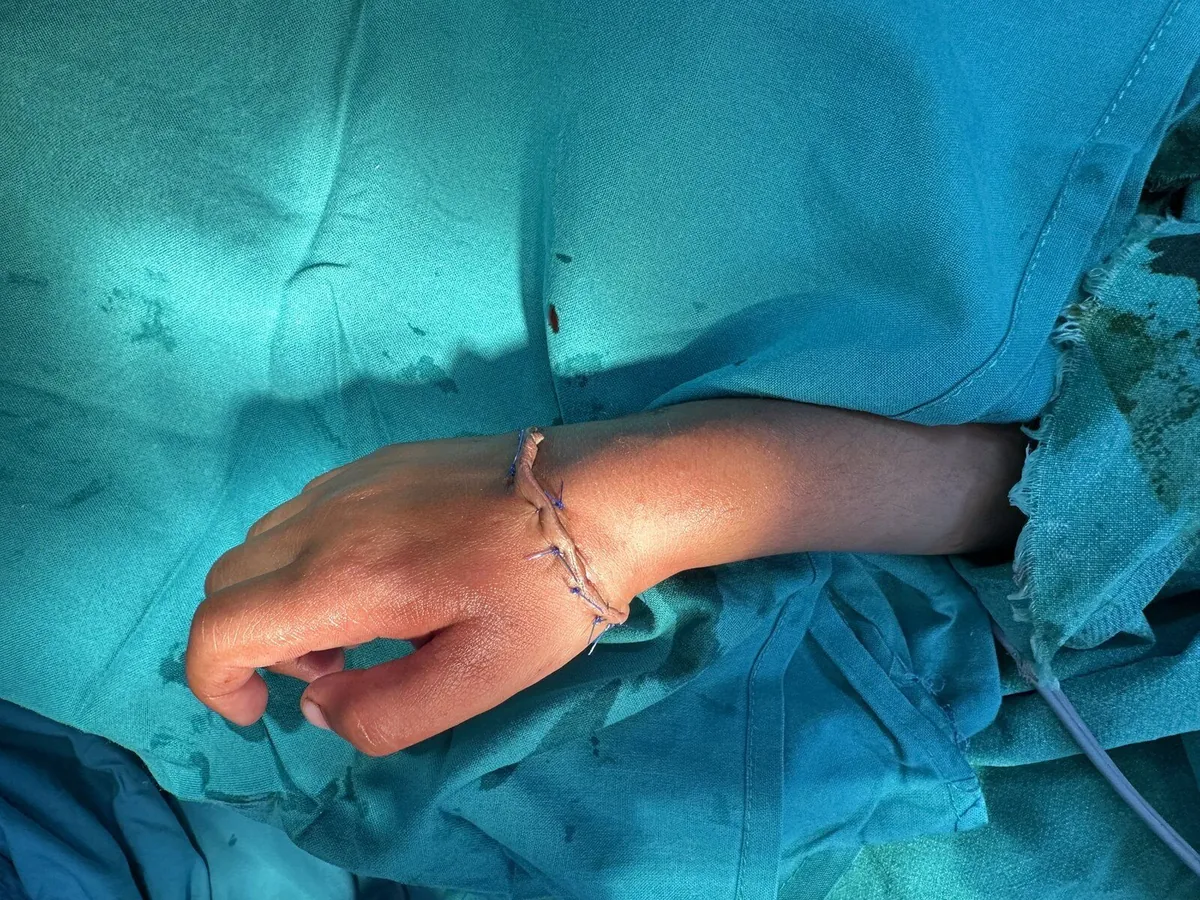
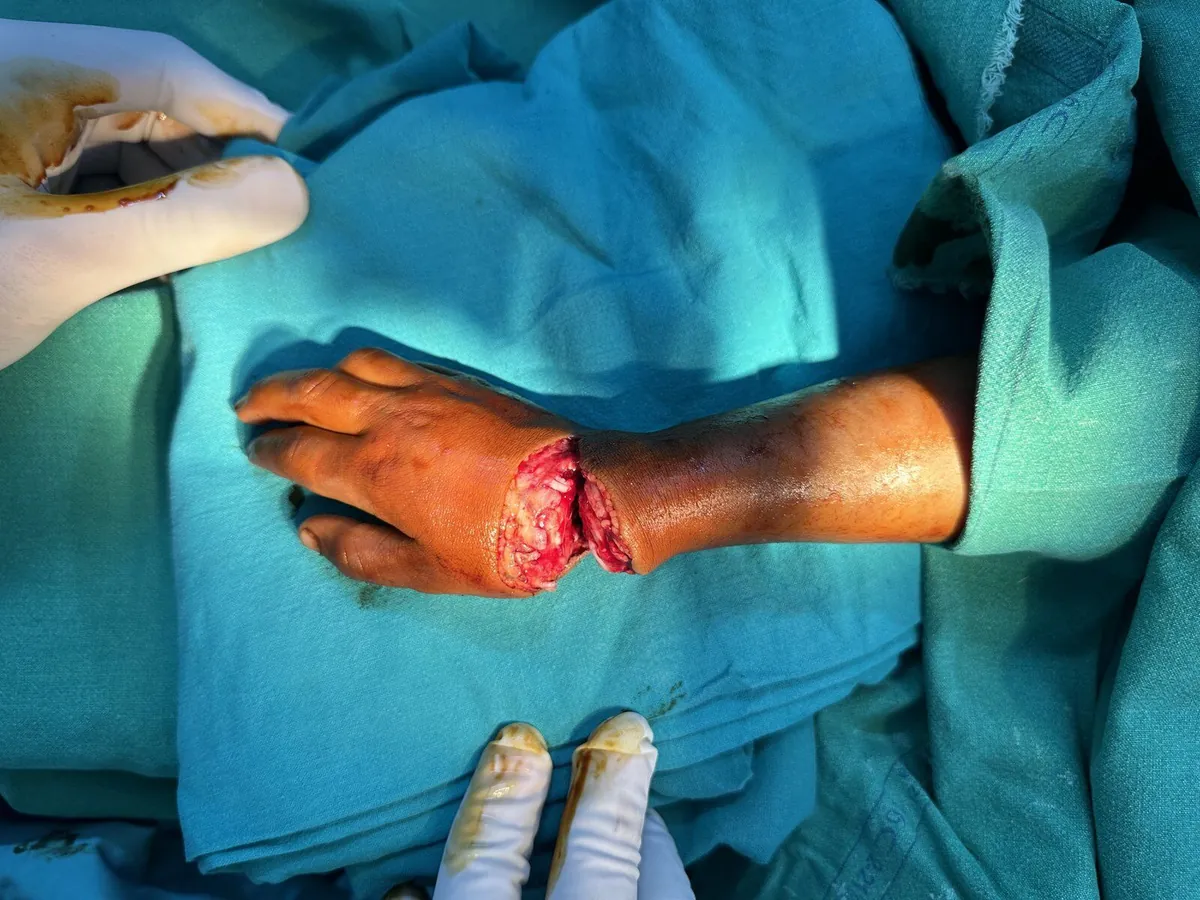 Before
After
Photos are shared with patient consent. Results vary from person to person. See more results
Benefits of Hand Surgery
Function Comes First
Each plan is built around what you need your hand to do, whether that is writing, farming, cooking or picking up your child.
Reconstructive Training
Dr. Junaid holds FCPS in Plastic Surgery and trained at Jinnah Burn & Reconstructive Surgery Centre in Lahore.
Fine, Careful Repair
Tendons, nerves and small vessels are repaired under magnification with very fine stitches.
Timely Treatment
Many tendon and nerve injuries do best when they are repaired early, so fresh injuries are assessed without delay.
Therapy Built In
Splints and hand exercises are planned from the start, because rehabilitation shapes the final result as much as the operation.
Day-Case Options
Smaller operations such as carpal tunnel or trigger finger release are often done under local anaesthetic, so you go home the same day.
Are you a good candidate?
Hand surgery may help if you have:
- A cut to the palm, finger or wrist and now cannot fully bend or straighten a finger
- Numbness or weakness after an injury, or night-time tingling in the fingers from carpal tunnel syndrome
- A finger that catches, clicks or locks when you bend it (trigger finger)
- A broken bone in the hand or wrist that is out of position or unstable
- Fingers slowly being pulled into the palm by tight cords (Dupuytren’s contracture)
- A painful lump such as a ganglion, or a hand difference present from birth
- Stiffness, scarring or deformity left behind by an old injury or burn
If your injury happened in the last few hours, go to the nearest emergency department first. Once you are safe and stable, Dr. Junaid can see you for specialist repair or follow-up.
Recovery & aftercare
Recovery depends on which structures were repaired. A typical pattern looks like this:
- First 48 hours
Keep the hand raised above heart level, move only the fingers you have been told to move, and take pain relief as advised.
- Days 10 to 14
The wound is checked and stitches are usually removed. After carpal tunnel or trigger finger release, light everyday use is often possible by now.
- Weeks 2 to 6
Fracture and tendon repairs stay protected in a splint while guided exercises gradually increase movement.
- Weeks 6 to 12
The splint is usually weaned off and strengthening begins. Desk work tends to resume earlier and heavy manual work later in this period.
- Months 3 to 12
Repaired nerves regrow slowly, so feeling and fine control can keep improving for many months after surgery.
Hand therapy is as important as the operation itself. Dr. Junaid and his team will give you a clear exercise plan and explain which movements to avoid while the repair heals.
What patients say
Had a hand injury that needed expert reconstruction. Dr. Junaid's microsurgical skill restored full function to my fingers. Exceptional doctor.
Related articles
Hand Surgery FAQs
I have just injured my hand. What should I do?
Go to the nearest emergency department straight away, especially if the wound is deep, bleeding heavily, or a finger feels numb or will not move. Press a clean cloth on the wound and keep the hand raised. If part of a finger has been cut off, wrap it in clean damp gauze, seal it in a plastic bag and place that bag on ice (never put the finger directly on ice), then take it with you. After emergency care, Dr. Junaid can review the injury for specialist repair.
How much does hand surgery cost in Lahore?
The cost depends on your condition, how many tendons, nerves or bones need repair, the type of anaesthetic, whether you stay overnight, and the hand therapy that follows. Dr. Junaid will give you a personalised quote after he has examined your hand. For a general guide to what affects pricing, see the cost guide.
Is hand surgery painful?
Most hand operations are done under local or regional anaesthetic, so the hand is numb and you feel pressure rather than pain. Some complex repairs need a general anaesthetic. Afterwards, aching and swelling are common for a few days and usually settle with simple painkillers and keeping the hand raised.
How long will I need off work?
After carpal tunnel or trigger finger release, many people return to office work within a few days to two weeks. Tendon, fracture and nerve repairs take longer, often six to twelve weeks before heavy manual work, and sometimes more. Dr. Junaid will give you a realistic timeline based on your job and your injury.
Why does timing matter for tendon and nerve injuries?
A cut tendon pulls back into the hand, and the ends of a cut nerve begin to change within days to weeks. The longer the wait, the harder a direct repair becomes. Older injuries can often still be improved with tendon grafts, tendon transfers or nerve grafts, but the surgery is usually more involved and recovery longer.
How long do the results of hand surgery last?
A healed tendon, nerve or bone repair is meant to be permanent, and carpal tunnel or trigger finger release usually gives lasting relief. Results vary between people, though. Severe crush injuries, delayed treatment, smoking and diabetes can limit recovery. Like any surgery, there are risks such as infection, stiffness, a sensitive scar and, after tendon repair, the repair stretching or breaking. Dr. Junaid goes through these with you at consultation.
Can I have an online consultation from abroad?
Yes. Send photos of your hand, any X-rays or reports, and a short description on WhatsApp, then book a video consultation. Dr. Junaid can explain your likely options, and the final plan is confirmed after he examines you in person in Lahore. For a fresh injury, do not wait for a video call. Go to the nearest emergency department first.
What are the risks or side effects of hand surgery?
Every operation carries some risk. Common issues are swelling, stiffness, a tender or sensitive scar and infection. Less often, a repaired tendon can stretch or break, or a nerve may recover only partly. Risks are reduced by careful repair under magnification, keeping the hand raised, following your splint and exercise plan, controlling diabetes and not smoking. Dr. Junaid goes through the risks of your operation with you at consultation.
When will I see the final results of hand surgery?
It depends on what was repaired. After carpal tunnel or trigger finger release, light everyday use is often possible by 10 to 14 days, although severe numbness can take months to improve. Tendon and fracture repairs are protected in a splint for about 6 weeks, then movement and strength build up with hand therapy. Repaired nerves regrow slowly, so feeling and fine control can keep improving for 3 to 12 months or longer.
Roman Urdu mein maloomat (ہاتھ کی سرجری)
Hand surgery mein haath aur kalai ki kati hui nas (tendon), nerve, tooti hui haddi aur carpal tunnel ya trigger finger jaise masail ka ilaj kiya jata hai. Dr. Junaid Fateh Lahore mein mareezon ko dekhte hain aur haath ki pakar, harkat aur ehsas wapas lane ke liye operation plan karte hain. Mashware ke liye WhatsApp par rabta karein.
WhatsApp par mashwara book karein