Quick answer
Limb reconstruction rebuilds arms and legs after serious injury, infection or tumour removal, usually with flap surgery to cover exposed bone, tendon or metalwork and help restore function. FCPS plastic surgeon Dr. Junaid Fateh sees patients in Lahore. Surgery takes 3 to 10 hours under general anaesthesia, with 3 to 7 days in hospital and 4 to 12 weeks of recovery. Cost depends on your plan and is confirmed after consultation.
Also known as: Limb salvage surgery, Leg reconstruction, Arm reconstruction, Flap surgery for leg wounds, Open fracture wound cover, Taang bachane ka operation, Taang ke gehre zakhm ka operation · بازو اور ٹانگ کی تعمیرِ نو
About Limb Reconstruction
A serious injury to an arm or leg, from a road accident, a fall or farm and factory machinery, can damage skin, muscle, tendon, nerve and bone all at once. A long-standing bone infection, or the removal of a tumour, can leave a similar gap. Limb reconstruction is the surgery that repairs these areas so the limb is covered with healthy tissue, protected from infection and able to work again.
Dr. Junaid Fateh is an FCPS-qualified plastic and reconstructive surgeon practising in Lahore. In limb reconstruction his main role is rebuilding the soft tissues, the skin, fat and muscle that cover and nourish bone, tendons and any plates or rods. He works closely with orthopaedic surgeons, who manage the bone and its fixation.
For a fresh injury, go to the nearest emergency department first. Stopping bleeding, cleaning the wound, stabilising fractures and starting antibiotics all come before reconstruction. Dr. Junaid can then help plan how the wound will be covered.
How Dr. Junaid approaches limb reconstruction
Every limb injury is different, so planning starts with a careful look at what has been lost and what is still healthy. Dr. Junaid examines the wound, the blood supply and the nerves, and reviews X-rays and scans with the orthopaedic team. Sometimes a scan of the blood vessels is needed before choosing a flap.
He works step by step, starting from the simplest method that will reliably do the job. That might be a skin graft, a flap of nearby tissue, or a free flap moved with microsurgery. The goal is a limb that is stable, well covered and useful, with the best appearance that can reasonably be achieved.
Honest discussion matters. In some very severe injuries, saving the limb may not give a better life than a carefully planned amputation and a good artificial limb, and Dr. Junaid will talk this through with you and your family. Limb reconstruction is major surgery, with risks that include infection, flap loss, slow bone healing, stiffness and the need for more operations, and he explains these at consultation.
Techniques and options
Options Dr. Junaid may recommend include:
- Debridement and wound preparation: removing damaged or infected tissue, sometimes over more than one operation, before the final reconstruction.
- Skin grafting: covering a clean wound bed with thin skin taken from the thigh or another area.
- Local and pedicled flaps: moving nearby muscle or skin, still attached to its own blood supply, to cover exposed bone or tendon.
- Free flap reconstruction: transferring tissue from another part of the body and reconnecting its vessels under the microscope when local tissue is not enough.
- Bone reconstruction with the orthopaedic team: bone grafts or a bone flap with its own blood supply to bridge a gap in the bone.
- Nerve and tendon reconstruction: repairing or grafting nerves, and tendon transfers to restore lost movement.
- Negative pressure wound therapy: a suction dressing used between stages to keep the wound clean and encourage healthy tissue.
What to expect on the day
Reconstruction is usually done under general anaesthesia and can take several hours. After a flap, expect to stay in hospital for three to seven days with the limb raised and the flap checked regularly. Physiotherapy usually starts in hospital and continues once you are home.
Before & after
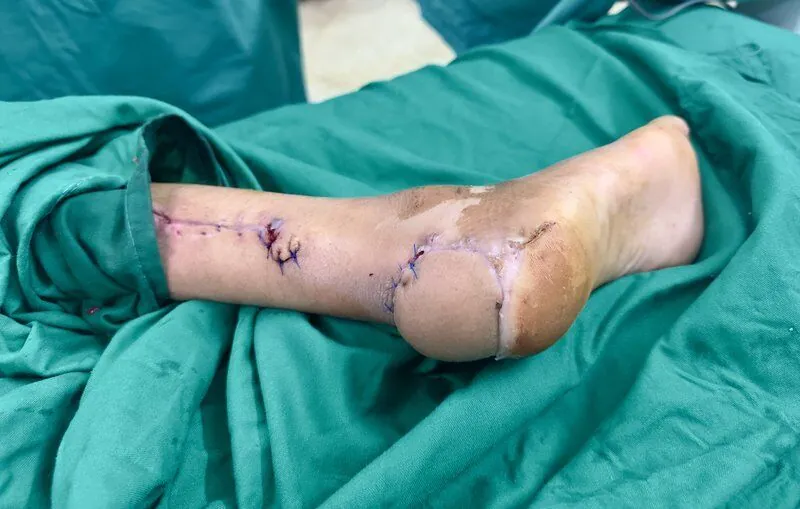
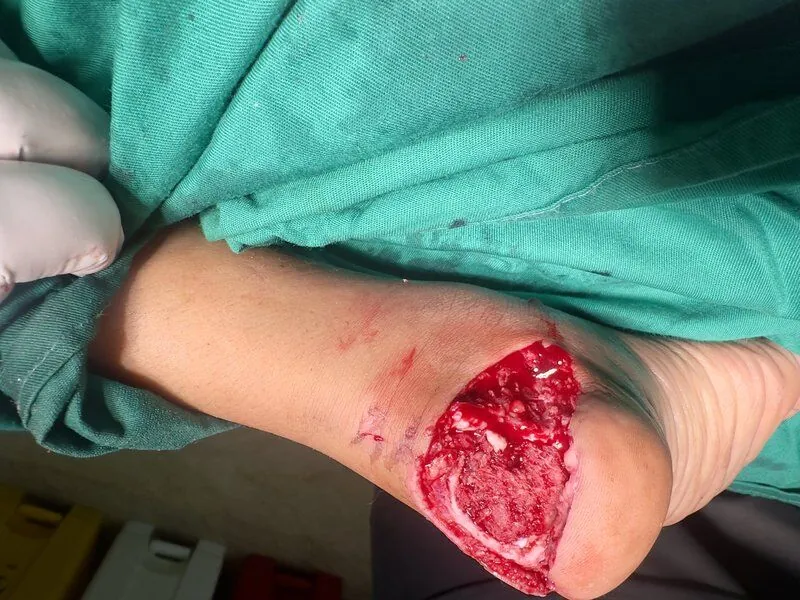 Before
After
Photos are shared with patient consent. Results vary from person to person. See more results
Benefits of Limb Reconstruction
Limb Preservation
Healthy tissue cover can help save a limb that might otherwise be at risk.
Protected Bone and Metalwork
Exposed bone, plates and rods are covered to lower the risk of deep infection.
Working Movement
Nerve and tendon procedures aim to bring back as much function as possible.
Team Approach
Dr. Junaid plans treatment alongside your orthopaedic surgeon and physiotherapist.
The Right Level of Surgery
The simplest reliable method is chosen, from a skin graft up to a free flap.
Back to Daily Life
Reconstruction and rehabilitation work together to help you walk, work and look after yourself again.
Are you a good candidate?
Limb reconstruction may be needed if you have:
- A serious arm or leg injury with loss of skin or muscle
- An open fracture, or exposed bone, tendon, joint or metal plate
- A long-standing bone infection (osteomyelitis) that needs clearing and covering
- A gap left after a tumour has been removed from an arm or leg
- A chronic wound on a limb that has not healed with simpler treatment
- A previous reconstruction that has broken down or needs improving
Your general health affects healing too. Stopping smoking and keeping conditions such as diabetes well controlled make a good result more likely.
Recovery & aftercare
Recovery is tailored to the injury and the operation. A typical course looks like this:
- First 3 days
The flap is checked frequently for colour and warmth, and the limb is kept raised and still.
- Days 3–7
Most people leave hospital in this window. A leg flap is gradually allowed to hang down for short periods, as the team guides you.
- Weeks 2–4
Wounds are checked and stitches removed. After a local flap, activity is increased step by step.
- Weeks 6–12
If bone was reconstructed, weight on the leg is usually limited for six to twelve weeks. Physiotherapy builds strength and movement.
- 3–12 months
Full recovery from complex reconstruction takes many months. A minor procedure may later refine the result.
Rehabilitation is as important as the surgery itself. Results vary between people, depending on the injury and how healing goes.
Limb Reconstruction FAQs
What should I do straight after a serious limb injury?
Go to the nearest emergency department first. Stopping bleeding, cleaning the wound, treating fractures and starting antibiotics are urgent. Dr. Junaid can then be involved in planning cover for the wound, and early input from a reconstructive surgeon is helpful.
Is limb reconstruction painful?
Surgery is done under general anaesthesia. Afterwards you will have regular pain relief, and discomfort usually eases steadily over the first week or two. Any area where tissue was taken from will also feel sore for a while.
How long does the operation take?
Most limb reconstructions take three hours or more, and a complex free flap can take much of the day. Simpler procedures such as a skin graft are shorter. Dr. Junaid will give you an estimate for your own operation.
How long is recovery, and when can I go back to work?
Expect four to twelve weeks before returning to most daily activities, and longer for manual work or if bone was reconstructed. Full recovery from complex reconstruction can take three to twelve months.
Are the results permanent?
A flap that has healed becomes a permanent part of the limb. Bone healing, strength and function keep improving for months. Some people later choose a minor procedure to thin a bulky flap. Results vary between people.
Is it always possible to save the limb?
Not always. In some very severe injuries, an amputation followed by a well-fitted artificial limb may give a better quality of life. Dr. Junaid and the orthopaedic team will explain the options honestly so that you and your family can make an informed decision.
How much does limb reconstruction cost?
The cost depends on the extent of the injury, the type of reconstruction, the number of operations, the hospital stay and rehabilitation needs. A personalised quote is provided after your consultation, and the cost guide explains what affects the price.
Can I have an online consultation from abroad?
Yes, for planned or delayed reconstruction. Send photos, X-rays and reports on WhatsApp and book a video consultation with Dr. Junaid. The final plan is confirmed after he examines you in person. A fresh injury needs the nearest emergency department first.
What are the risks or side effects of limb reconstruction?
Limb reconstruction is major surgery. Risks include bleeding, infection, problems with the flap’s blood supply that may need a return to theatre, slow healing at the donor site, blood clots, and swelling or bulk of the flap. In very severe injuries the limb cannot always be saved. Risks are reduced by close flap monitoring, keeping the limb raised, not smoking, controlling diabetes and working closely with your orthopaedic team. Dr. Junaid discusses these openly before surgery.
Roman Urdu mein maloomat (بازو اور ٹانگ کی تعمیرِ نو)
Limb reconstruction mein shadeed chot, infection ya rasoli nikalne ke baad bazu ya taang ke aise zakhm ko dhaka jata hai jahan haddi ya plate nazar aa rahi ho, taake azu bach sake aur us ka kaam behtar ho. Dr. Junaid Fateh Lahore mein mareezon ko dekhte hain aur orthopaedic surgeon ke sath mil kar ilaj plan karte hain. Mashware ke liye WhatsApp par rabta karein.
WhatsApp par mashwara book karein