Quick answer
Acne scar treatment improves pitted, rolling or uneven scars left after acne, using methods such as subcision, microneedling, chemical peels and, where suitable, laser resurfacing. In Lahore it is provided by FCPS plastic surgeon Dr. Junaid Fateh. Outpatient sessions take 30 minutes to 2 hours under topical or local anesthesia, with 3 to 7 days of downtime. Improvement is progressive over several sessions. Cost depends on your plan and is confirmed after consultation.
Also known as: Acne scar removal, Acne scar revision, Pitted scar treatment, Pimple scars treatment, Subcision for acne scars, Chehre ke daag ka ilaj, Daanon ke nishan ka ilaj, Keel muhason ke nishan ka ilaj · کیل مہاسوں کے داغوں کا علاج
About Acne Scar Treatment
Acne usually settles with time, but the marks it leaves can stay for years. When deep or inflamed spots heal, the skin sometimes loses collagen or is pulled down by bands of scar tissue underneath. The result is a pitted, uneven texture that makeup struggles to hide and that shows most clearly when light falls across the face from the side.
Acne scars come in several forms. Ice pick scars are narrow and deep. Boxcar scars are wider, with sharp edges. Rolling scars give the skin a wavy surface because they are tethered to the tissue beneath. Some people also develop raised scars. Flat red or brown marks are a different issue: they are not true scars and often fade on their own or with good skin care.
Dr. Junaid Fateh is a plastic, cosmetic and reconstructive surgeon in Lahore. He treats acne scarring with a combination of procedures matched to the scar types each person has.
How Dr. Junaid approaches acne scar treatment
The first appointment is about understanding your skin. Dr. Junaid examines your scars under different lighting, identifies which types you have and asks about your acne history, current skin care and any medicines, including isotretinoin. If acne is still active, he will advise on settling it before scar work begins.
Because most people have a mix of scar types, he usually recommends a combined plan rather than a single treatment. One session might focus on releasing tethered scars, while a later one concentrates on resurfacing. The plan is staged so that each step builds on the one before.
South Asian skin can develop dark patches after inflammation, so treatment choice and intensity are adjusted to keep this risk low. Results vary between people, and improvement is gradual over several months. Like any procedure, acne scar treatments carry some risks, such as bruising, infection, pigment change or a temporary increase in redness, and Dr. Junaid goes through these with you at consultation.
Techniques and options
Options Dr. Junaid may recommend include:
- Subcision: A fine needle is passed under the skin to cut the fibrous bands pulling rolling scars down, allowing the surface to lift.
- Microneedling: Controlled micro-injuries prompt the skin to make new collagen. It is sometimes combined with PRP (platelet-rich plasma) prepared from your own blood.
- TCA CROSS: A concentrated acid is applied precisely into narrow ice pick scars to help them fill in from the base.
- Punch excision or elevation: Individual deep scars are removed or raised and closed neatly so they heal flatter.
- Chemical peels: Medical peels of a suitable strength improve surface texture and tone over a series of sessions.
- Laser resurfacing: For selected skin types, laser treatment can resurface the skin and encourage collagen renewal.
- Fillers: Injectable fillers can raise some soft, rolling scars for an instant but temporary improvement.
What to expect on the day
Most sessions take between 30 minutes and two hours, depending on the methods used and the size of the area. Your face is cleansed and numbed with cream or local anesthetic, and Dr. Junaid then works through the plan for that visit. You go home the same day with clear aftercare advice on cleansing, moisturizing and sun protection, along with a date for your next session.
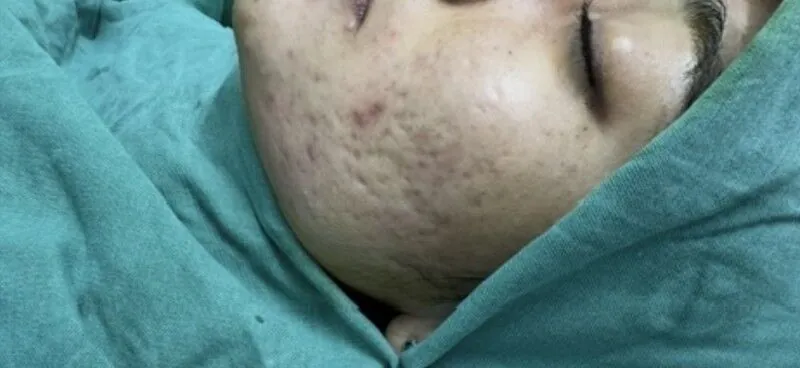
Before & after
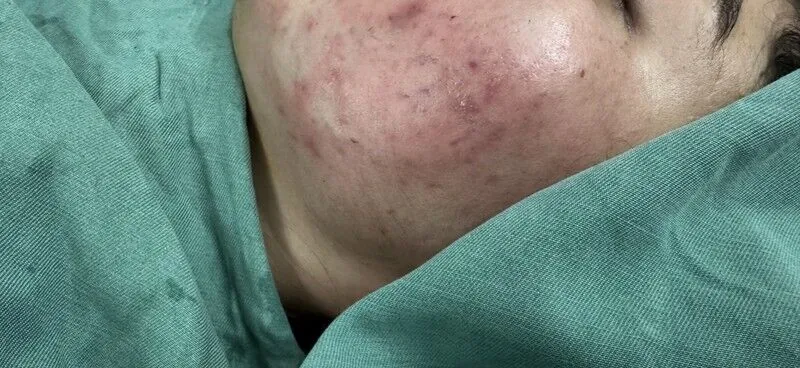
 Before
After
Photos are shared with patient consent. Results vary from person to person. See more results
Benefits of Acne Scar Treatment
A More Even Surface
Releasing tethered scars and encouraging new collagen helps the skin surface look more even.
Matched to Your Scars
Ice pick, boxcar and rolling scars respond to different methods, so your plan is built around the types you have.
Combination Approach
Using more than one technique often gives better improvement than relying on a single treatment.
Manageable Downtime
Most sessions mean only a few days of redness or bruising, so treatment can fit around work.
Care for Darker Skin
Treatment choice and strength take into account the higher risk of dark marks in South Asian skin.
Lasting Improvement
Once scars have been lifted and remodeled, the improvement holds well with good skin care.
Are you a good candidate?
You may benefit from acne scar treatment if you:
- Have pitted, rolling or uneven scars left after acne has settled
- Have little or no active acne, or your breakouts are under control
- Understand that improvement is gradual and usually takes several sessions
- Can protect your skin from the sun during and after treatment
- Have finished any course of isotretinoin, or can wait for as long as Dr. Junaid advises before certain treatments
- Are in good general health with no active skin infection on the face
If you still have regular breakouts, the first step is bringing the acne under control. Treating scars while new spots are still forming tends to give disappointing results, and Dr. Junaid will advise you on this first.
Recovery & aftercare
Recovery depends on which treatments are used. As a general guide:
- Microneedling
The skin looks pink and feels warm, a little like mild sunburn, for one to three days. Most people are back to normal routines within a day or two.
- Chemical peels
Expect dryness and flaking for roughly three to seven days, depending on how deep the peel is.
- Subcision
Bruising and swelling over the treated areas usually settle within about a week.
- Laser resurfacing
Where it is used, redness and peeling last around five to ten days, which is more downtime than the lighter options.
- Throughout treatment
Daily broad-spectrum sunscreen and gentle skin care protect healing skin and lower the risk of dark marks, especially in the strong summer sun.
Sessions are usually spaced several weeks apart so the skin has time to build new collagen in between. Improvement continues for months after the final session.
Acne Scar Treatment FAQs
How many sessions will I need?
Most people need a series of sessions a few weeks apart, often somewhere between three and six. The exact number depends on how deep and widespread your scars are and which treatments are combined. Dr. Junaid will outline a realistic plan at your consultation.
Can every type of acne scar be improved?
Most types can be improved, but each responds best to a different method. Narrow ice pick scars may need targeted treatment such as TCA CROSS or punch techniques, rolling scars often do well with subcision, and boxcar scars may need a mix of approaches. Raised scars are treated differently again.
Will my acne scars disappear completely?
In honesty, complete removal is rarely possible. The aim is a clear, visible improvement so the scars are far less noticeable in everyday light. How much change you see varies between people and between scar types.
Does acne scar treatment hurt?
Numbing cream or local anesthesia is used before treatment, so most people describe a prickling or pressure sensation rather than pain. Areas treated with subcision may feel tender and bruised for a few days afterwards.
How long do the results last?
Scars that have been lifted and filled in with new collagen generally stay improved for the long term. Fillers used for scars are temporary, and fresh acne can create new scars, so keeping breakouts under control matters.
Will I need time off work?
Many people return to work the next day after microneedling or a light peel. After subcision or deeper treatments you may prefer a few days to a week at home while bruising or peeling settles.
How much does acne scar treatment cost in Lahore?
The cost depends on the treatments chosen, the size of the area and how many sessions you need. A personalized quote follows your consultation, and the cost guide explains what affects the overall price.
Can I have an online consultation from abroad?
Yes. Acne scars show up best in photos taken with light coming from the side, so send a few of those on WhatsApp and book a video consultation. Dr. Junaid can suggest a likely plan, and the final plan is confirmed after he assesses your skin in person.
What are the risks or side effects of acne scar treatment?
Most side effects are short-lived, such as redness, swelling, flaking and, after subcision, bruising for about a week. Less common risks include infection, a flare of acne or cold sores, dark patches (post-inflammatory hyperpigmentation), which are more likely in brown skin and strong sun, and rarely new scarring after deeper treatments. Matching the treatment depth to your skin type, spacing sessions properly and using daily sunscreen help reduce these risks.
When will I see the final results of acne scar treatment?
Improvement is gradual because the skin needs time to build new collagen. Many people notice a change after the first few sessions, and the skin keeps improving for several months after the final session, so the overall result is best judged a few months after the course is complete.
Roman Urdu mein maloomat (کیل مہاسوں کے داغوں کا علاج)
Keel muhason ke baad chehre par rehne wale gehre ya oonche neeche daag ko subcision, microneedling aur peels jaise tareeqon se qadam ba qadam behtar kiya jata hai. Aam taur par kai sessions lagte hain. Dr. Junaid Fateh Lahore mein mareezon ko dekhte hain, mashware ke liye WhatsApp par rabta karein.
WhatsApp par mashwara book karein