Quick answer
Microsurgery is surgery under magnification to join tiny blood vessels and nerves, used for free flaps, nerve repair and reattaching cut-off fingers. FCPS plastic surgeon Dr. Junaid Fateh sees patients in Lahore. Operations take 4 to 12 hours under general anaesthesia, with 3 to 7 days in hospital and 2 to 8 weeks of recovery. Nerve recovery continues for months. Cost depends on your plan and is confirmed after consultation.
Also known as: Microvascular surgery, Free flap surgery, Free tissue transfer, Reconstructive microsurgery, Finger replantation, Nerve repair surgery, Kati hui ungli jodne ka operation, Nas jodne ka operation · مائیکرو سرجری
About Microsurgery
Microsurgery is surgery carried out under high magnification, using an operating microscope with very fine instruments and stitches. It allows a surgeon to join blood vessels and nerves that are only a millimetre or two across. Rather than a single operation, it is a skill that makes several kinds of reconstruction possible.
Its best-known use is the free flap. A piece of tissue, such as skin, fat, muscle or bone, is lifted from one part of the body together with its own artery and vein. It is then moved to where it is needed and plugged into local blood vessels under the microscope. This lets a surgeon rebuild areas where no nearby tissue is suitable, for example after a serious leg injury, cancer surgery or a deep burn.
Dr. Junaid Fateh, a plastic and reconstructive surgeon in Lahore, uses microsurgical techniques within his hand and reconstructive surgery work. He trained in plastic surgery at the Jinnah Burn & Reconstructive Surgery Centre, Lahore. If a finger or hand has just been cut off or badly injured, go to the nearest emergency department first and keep the amputated part cool, as described in the questions below.
How Dr. Junaid approaches microsurgery
Microsurgery is planned in detail. Dr. Junaid assesses the wound or injury, your general health and the blood vessels in the area, sometimes with a scan. He first asks whether a simpler method, such as a skin graft or a local flap, would do the job just as well, and recommends microsurgery only when it offers a clear advantage.
You will talk through where the tissue will come from, what scar it will leave there, and how the transferred tissue should look and work once healed. Smoking narrows blood vessels and raises the chance of a flap failing, so stopping well before surgery is strongly advised.
The first few days after a free flap matter most. The clinical team checks the flap’s colour, warmth and blood flow at regular intervals, so that any problem with the vessel joins is spotted early. Microsurgery is major surgery with real risks, including bleeding, infection, clots, partial or complete flap loss and further operations, and Dr. Junaid goes through these with you at consultation.
Techniques and options
Options Dr. Junaid may recommend include:
- Free flap reconstruction: transferring skin, fat, muscle or bone with its blood supply to rebuild a defect elsewhere in the body.
- Perforator flaps: a refined type of free flap that takes skin and fat on small vessels while leaving the muscle underneath in place.
- Nerve repair and nerve grafting: joining a cut nerve end to end, or bridging a gap with a short length of nerve from elsewhere, to help feeling and movement return.
- Replantation: reattaching a finger, thumb or hand that has been cut off, when the injury and the amputated part make this possible.
- Revascularisation: restoring blood flow to a finger or limb that is still attached but whose vessels have been damaged.
- Lymphatic surgery: in selected patients with lymphoedema, joining tiny lymph channels to nearby veins to help fluid drain. Dr. Junaid will advise whether this is likely to help in your case.
Microsurgery is also used in breast reconstruction with your own tissue, which is described on its own page.
What to expect on the day
Planned microsurgery takes place under general anaesthesia and usually lasts several hours. Expect to stay in hospital for three to seven days so the flap or repair can be watched closely. Keep warm, drink fluids when you are allowed to, and avoid smoking completely.
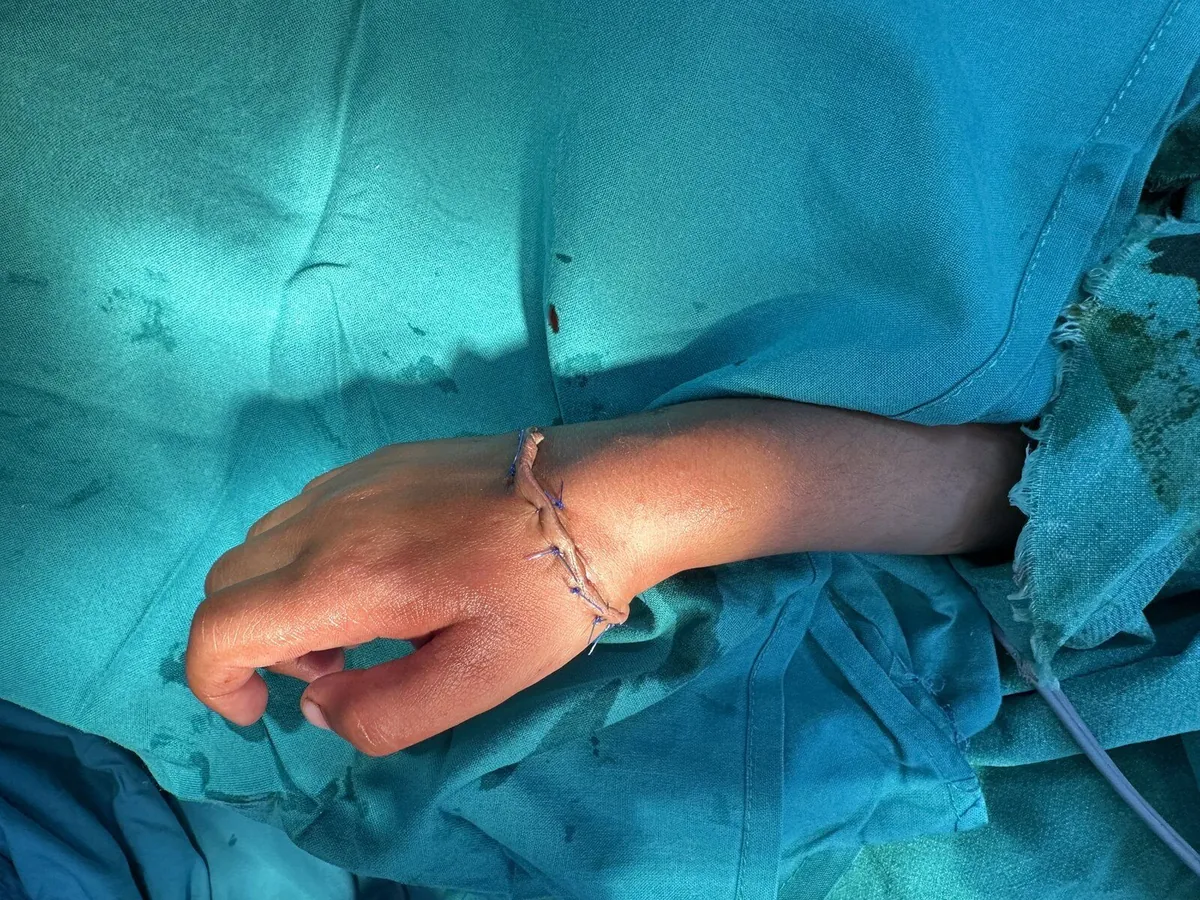
Before & after
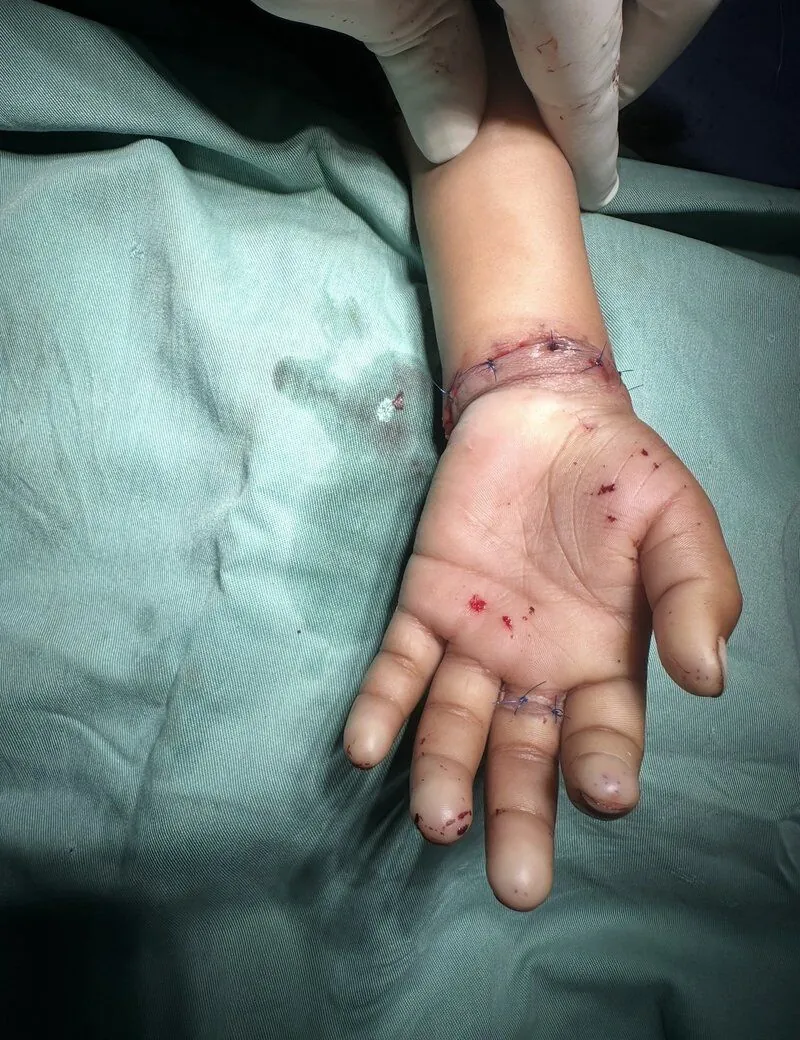
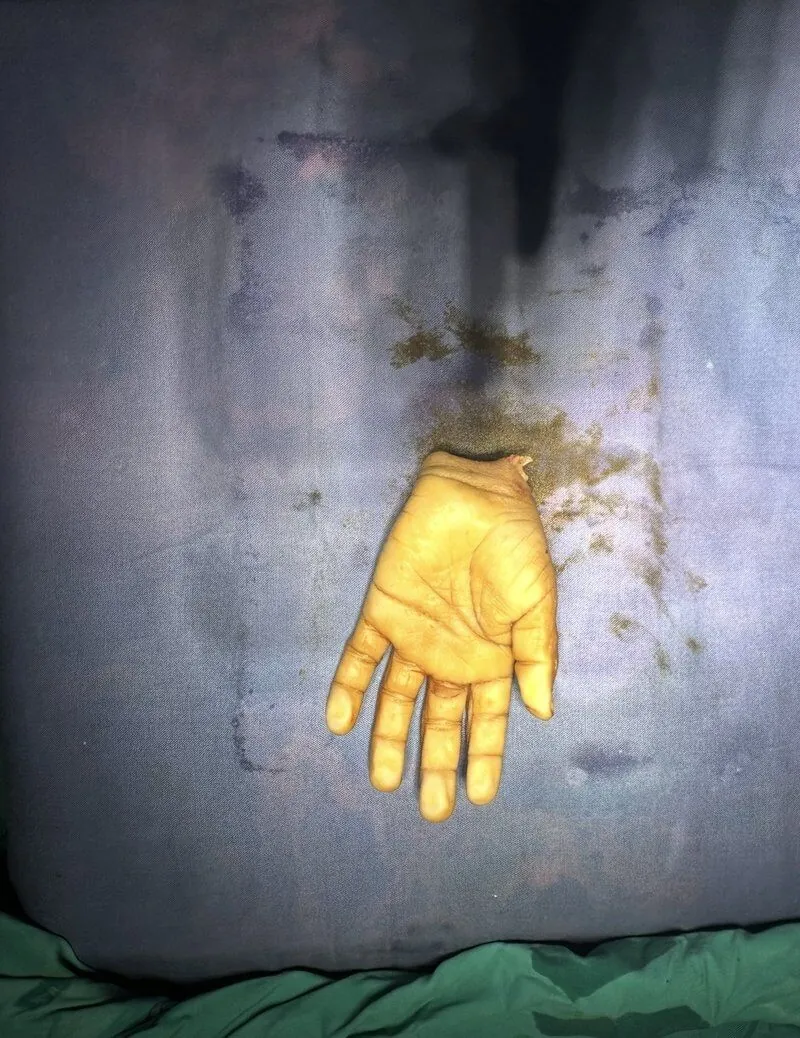 Before
After
Photos are shared with patient consent. Results vary from person to person. See more results
Benefits of Microsurgery
Rebuilds Complex Defects
Tissue can be brought from elsewhere in the body when nothing nearby is suitable.
Nerve Recovery
Precise nerve repair gives feeling and movement the best chance of returning.
Saving Injured Fingers
In suitable cases, a severed finger or thumb can be reattached and its blood flow restored.
Healthy Coverage
Tissue with a good blood supply covers exposed bone, tendon or metalwork and helps it heal.
Close Monitoring
The flap is checked frequently in the first days so any problem can be acted on quickly.
Honest Planning
Microsurgery is recommended only when it offers a clear advantage over simpler options.
Are you a good candidate?
Microsurgery may be recommended if you have:
- A large or deep wound that cannot be covered with a skin graft or nearby tissue
- Exposed bone, tendon or metalwork after an injury or operation
- A cut nerve in the hand, arm or leg affecting feeling or movement
- A finger, thumb or hand that has been cut off or badly crushed
- A gap left after removal of a tumour that needs rebuilding
- An old injury, such as a tight scar or a numb area, where a flap or nerve graft may help
You need to be fit enough for a longer anaesthetic. Stopping smoking and keeping conditions such as diabetes well controlled improve the chances of a good outcome.
Recovery & aftercare
Recovery depends on which microsurgical procedure you have. As a general guide:
- First 3–5 days
The flap or repair is monitored closely in hospital. Rest, warmth and good fluid intake help blood flow.
- Going home
Most people are discharged after three to seven days with a dressing, and a splint if the hand or arm was treated.
- Weeks 2–4
Stitches are removed and activity is increased gradually. Avoid pressure on the flap and do not smoke.
- Weeks 4–8
Most people return to normal daily activities, guided by Dr. Junaid and your therapist.
- 6–18 months
After nerve repair, feeling and strength come back slowly as the nerve regrows, roughly a millimetre a day.
A flap may look bulky at first and usually settles over several months, and a small revision can refine its shape later if needed. Results vary between people.
Related articles
Microsurgery FAQs
Can a severed finger be reattached?
Sometimes. It depends on how the finger was injured, the level of the cut, the condition of the amputated part and how quickly you reach hospital. Go straight to the nearest emergency department. Wrap the part in clean, damp gauze or cloth, seal it in a plastic bag and place that bag on ice. Never put the part directly on ice or in water.
Is microsurgery painful?
You are asleep under general anaesthesia during the operation. Afterwards pain is controlled with regular medicines. Both the reconstructed area and the donor site, where tissue was taken from, will feel sore for a few days.
How many hours will the operation last?
A free flap commonly takes several hours and sometimes most of the day, depending on its size and complexity. A single nerve repair is usually shorter. Dr. Junaid will give you an estimate for your own operation.
How long is recovery, and when can I return to work?
Most people need two to eight weeks before going back to normal activities, depending on the operation and the kind of work they do. Desk work is often possible sooner than manual work. Nerve recovery continues for many months after that.
Are the results permanent?
Once a free flap has healed and settled, it becomes a permanent part of your body and changes with you over time, for example with weight gain or loss. How much feeling and movement return after nerve repair varies between people, but the recovery that is achieved usually lasts.
What happens if a flap runs into problems?
Problems with a flap’s blood supply are most likely in the first few days, which is why monitoring is so close. A quick return to theatre can often save it. If a flap is lost, another way of reconstructing the area is planned. Like any major surgery there are also risks such as bleeding, infection and clots, and Dr. Junaid discusses all of these openly before you decide.
How much does microsurgery cost?
The cost depends on the type of reconstruction, the length of the operation, the hospital stay and any further procedures or therapy. You will receive a personalised quote after your consultation, and the cost guide explains what affects the price.
Can I have an online consultation from abroad?
Yes, for planned reconstruction. Send photos and any reports on WhatsApp and book a video consultation with Dr. Junaid to talk through your options. The final plan is confirmed in person. For a fresh injury or a severed finger, go to the nearest emergency department immediately.
When will I see the final results of microsurgery?
Most people return to normal daily activities within 4 to 8 weeks. A flap may look bulky at first and usually settles over several months, and a small revision can refine its shape later if needed. After nerve repair, feeling and strength come back slowly as the nerve regrows, so results keep improving for 6 to 18 months.
Roman Urdu mein maloomat (مائیکرو سرجری)
Microsurgery mein magnification ke zariye khoon ki bohat bareek naliyon aur nerves ko joda jata hai, jaise kati hui ungli dobara jodne ya bade zakhm ko jism ke doosre hisse ke tissue se dhakne ke liye. Dr. Junaid Fateh Lahore mein mareezon ko dekhte hain. Mashware ke liye WhatsApp par rabta karein.
WhatsApp par mashwara book karein