 By Dr. Muhammad Junaid Fateh
· Updated · 5 min read
Key takeaways
- Swelling and small crusts are normal in the first two weeks, and the crusts usually come away by about day 14.
- Most transplanted hairs shed between about two and six weeks after surgery; the roots stay and regrow.
- Fine new hairs usually appear around three to four months and thicken noticeably by six to nine months.
- The final result takes about twelve to eighteen months, and the crown often takes longest.
- Contact the team for bleeding that will not stop, worsening pain, spreading redness, pus or fever.
The surgery itself takes a day, but the result takes the best part of a year to arrive. Knowing what is normal at each stage makes the wait far easier, especially during the shedding phase that worries so many people. Here is what recovery usually looks like after an FUE or FUT hair transplant, first day by day and then month by month.
Timings below are typical ranges. Your own recovery may be faster or slower, and Dr. Junaid Fateh’s team will give you written instructions for your case. Always follow those over any general guide.
The first two weeks, day by day
Day 0: the day of surgery
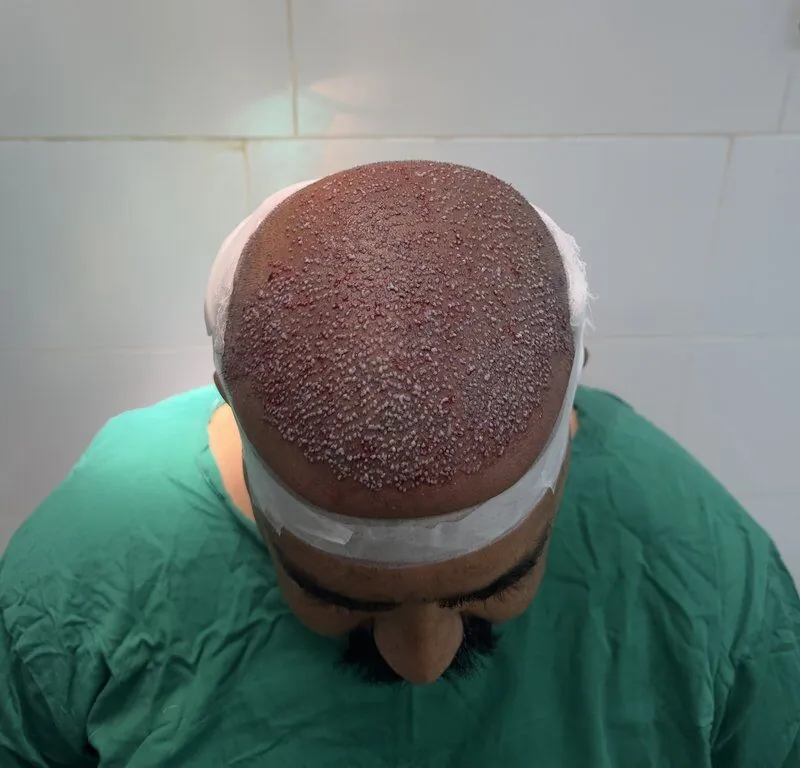
You go home the same day with a light dressing over the donor area and sometimes a headband across the forehead. The scalp feels numb from the local anaesthetic for a few hours, then sore or tight. Pain is usually mild to moderate and managed with the medicines you are given.
- Sleep with your head raised on two or three pillows to reduce swelling.
- Avoid touching, scratching or rubbing the grafts.
- Do not bend forward for long or lift anything heavy.
Days 1 to 3: swelling and the first wash
Swelling often builds over the forehead during this time and can drift down to the eyelids by day two or three. It looks dramatic but is not harmful and settles on its own. Small crusts form around each graft.
The team will show you how and when to do your first gentle wash. This usually involves pouring lukewarm water and a mild shampoo over the grafts without rubbing.
Days 4 to 7: settling down
Swelling fades and the scalp feels more comfortable. Redness in the recipient area is normal. After FUE, the dots in the donor area begin to heal over. After FUT, the line at the back may still feel tight.
Many people who had FUE and work at a desk return to work around this time, often wearing a loose cap.
Days 7 to 14: crusts come away
With regular gentle washing, the crusts soften and fall off, usually by the end of the second week. You may see tiny hairs inside them. This is normal and does not mean the grafts have been lost.
If you had FUT, your stitches are normally removed in this window. Itching is common as the skin heals. Ask the team what you can use to ease it rather than scratching.
Month by month: shedding and regrowth
Weeks 2 to 6: the shedding phase
Most transplanted hairs fall out during this period. It is called shock loss, and it is expected. The hair shaft sheds while the root stays alive beneath the skin, getting ready to grow a new hair.
Some people also notice temporary thinning of their own existing hair near the transplanted area. This usually recovers over the following months.
Months 2 to 3: the quiet phase
This is often the hardest stretch, because the scalp can look much as it did before surgery. The follicles are resting. Some people get small pimples where new hairs are pushing through. Most settle without treatment, but tell the team if they become painful, swollen or numerous.
Months 3 to 4: first new growth
Fine, soft hairs start to appear. They may be thin, wavy or a slightly different texture at first. This is normal, and they usually thicken with time.
Months 6 to 9: visible change
By now, many people see a clear difference in coverage. Hairs grow longer and thicker, and you can begin styling your hair more normally. The front often looks fuller sooner than the crown.
Months 12 to 18: the final result
Growth continues to mature and the texture settles. Around the twelve-month mark is a good time for a review with Dr. Junaid, in person or by video. The crown and large sessions can take up to eighteen months to show their full effect.
Recovery timeline at a glance
| Time after surgery | What is usually happening | What you can usually do |
|---|---|---|
| Days 0–3 | Soreness, swelling, crusts forming | Rest, sleep head-up, first gentle wash as instructed |
| Days 4–7 | Swelling fading, redness | Light walking, desk work for many FUE patients |
| Days 7–14 | Crusts fall off, FUT stitches out | Most normal daily activities |
| Weeks 2–6 | Transplanted hairs shed | Light exercise, then gradual return to the gym as advised |
| Months 2–3 | Resting phase, possible pimples | Normal routine; be patient |
| Months 3–4 | Fine new hairs appear | Haircuts with scissors, as advised |
| Months 6–9 | Clear thickening | Style as normal |
| Months 12–18 | Final result | Review with Dr. Junaid |
Activities: when can I…?
These are common guidelines. Your own timings may be different.
- Exercise: gentle walking from the next day. Avoid heavy lifting, running and the gym for around two weeks, and contact sports for longer.
- Swimming: avoid pools and the sea for about a month.
- Sun: protect your scalp from direct sun for the first few months. In a Pakistani summer, plan errands for the cooler part of the day and use a loose cap once allowed.
- Smoking: stop before and after surgery if you can. Smoking reduces blood flow and can affect how well grafts survive.
- Haircuts: scissors are usually fine after about a month; clippers on the donor area may need to wait longer.
- Hair colour and chemicals: avoid them for at least a month, or longer if your scalp is still sensitive.
Signs you should contact the team
Contact Dr. Junaid’s team on WhatsApp, or seek urgent medical care, if you notice:
- Bleeding that does not stop after ten to fifteen minutes of firm, gentle pressure
- Pain that keeps getting worse instead of better
- Spreading redness, warmth, pus or a bad smell
- Fever or feeling generally unwell
Planning around weddings and Eid
Because the shedding and quiet phases can last a few months, try not to schedule a hair transplant just before a family wedding or major event. If you want a fuller look for a particular date, speak to Dr. Junaid early. He may suggest planning surgery about a year ahead.
Some people also choose PRP hair therapy alongside their transplant to support their existing hair. Ask whether it suits you.
To read more about the procedures themselves, see FUE hair transplant, FUT hair transplant or the main hair transplant in Lahore page.
Talk to Dr. Junaid
If you are considering a hair transplant, or you have had one and want an opinion on your progress, send photos of your scalp on WhatsApp and book a consultation. Dr. Junaid sees patients in Lahore, and offers video consultations for people in other cities or overseas patients.
This article is general information and not a substitute for a personal medical consultation.
Quick answers
When can I go back to work after a hair transplant?
Many people return to desk work within a few days to a week after FUE, and within one to two weeks after FUT. If your job is physical, dusty or outdoors, you may need longer. Dr. Junaid will advise you based on your procedure and work.
Is it normal for transplanted hair to fall out?
Yes. Most transplanted hairs shed between about two and six weeks after surgery. The roots stay in place under the skin and usually start producing new hair a few months later.
When will I see the final result?
New growth usually begins around three to four months, looks noticeably fuller by six to nine months, and keeps maturing until about twelve to eighteen months. The crown often takes longer than the front. Results vary between people.
When can I wear a cap or helmet again?
A loose, clean cap is usually allowed after the first few days, once the grafts have settled. Tight hats and helmets are best avoided for longer. Follow the timings Dr. Junaid’s team gives you for your own case.
About the author
Dr. Muhammad Junaid Fateh
Plastic, Cosmetic & Reconstructive Surgeon (MBBS, FCPS (Plastic Surgery)) seeing patients in Lahore. Read more about Dr. Junaid.